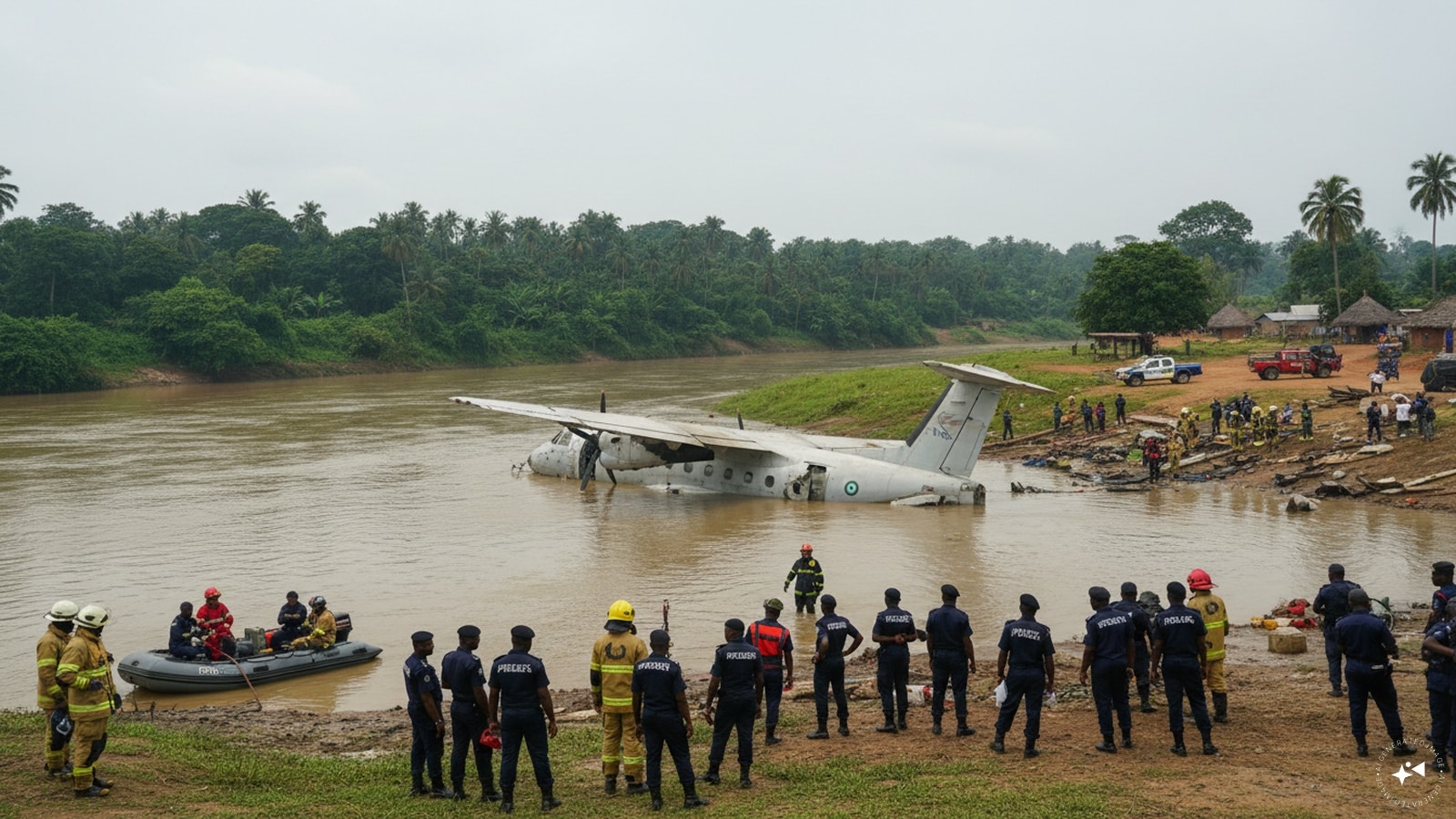
Thirty-two lives ended in a flash over Ondo State. A routine military transport flight turned into a national tragedy when a Nigerian Air Force ATR-42 aircraft went down, leaving no survivors and plunging the country's armed forces into deep mourning.
President Bola Tinubu wasted no time confirming the worst. All 25 passengers and 7 crew members lost their lives when the aircraft crashed in the riverside town of Igbokoda. National mourning was declared immediately, ordering flags to fly at half-staff. If you’ve followed the history of military aviation safety in West Africa, this disaster hits with a crushing sense of deja vu.
What Happened During the Flight
The aircraft departed Benin City in Edo state, bound for Lagos—the economic engine of Nigeria. It was supposed to be a standard operational hop.
At approximately 9:00 a.m. local time, air traffic controllers lost contact. The ATR-42 disappeared from radar screens midway through its journey. Witnesses on the ground near Igbokoda described hearing a sound resembling a thunder strike before seeing the aircraft clip trees and plunge toward a marshy area near a naval base. Parts of the plane reportedly sank into the water, complicating initial recovery efforts by emergency responders and locals who rushed to the scene.
Aviation Minister Festus Keyamo coordinated closely with the Chief of Air Staff, Air Marshal Sunday Kelvin Aneke, activating emergency protocols as soon as radar contact vanished. But the speed of the impact left little room for intervention.
Why the ATR-42 Matters in Nigerian Military Operations
The Nigerian Air Force relies heavily on the ATR-42 for various duties. Originally manufactured as a twin-turboprop regional airliner, military variants are adapted for transport, intelligence, surveillance, and reconnaissance (ISR) tasks.
Military planners love these platforms because they are rugged, fuel-efficient, and capable of operating from shorter runways. But military transport missions in complex terrain carry inherent risks. When an airframe goes down with this many personnel on board, questions about maintenance logs, flight hours, and weather conditions naturally follow. Authorities have launched an investigation to uncover the exact mechanical or environmental trigger behind the sudden descent.
The Broader Impact on West African Aviation Safety
Accidents involving military hardware shake public confidence and leave families shattered. Nigeria's armed forces have experienced previous high-profile aviation incidents over the years, putting constant pressure on military leadership to audit safety protocols, upgrade aging avionics, and tighten maintenance standards across the fleet.
While black box data and official military boards of inquiry take weeks to release definitive findings, the immediate reality is stark. Families are grieving twenty-five passengers and seven dedicated crew members who woke up expecting a routine transit to Lagos.
As search and recovery teams finish combing the swampy terrain of Igbokoda, the focus shifts entirely to honoring the fallen personnel and ensuring that the causes behind this disaster are brought fully to light.