When military analysts tally the toll of modern air campaigns, they usually focus on missile strikes and high-altitude interception rates. But a recent Congressional Research Service paper lays bare a more staggering physical reality. At least 81 American warplanes, helicopters, and drones have been destroyed or damaged since Washington and Israel initiated military operations against Iran in late February.
The financial price tag sits around $3.3 billion. That is not just pocket change. It represents a serious erosion of frontline capability in a contested airspace. Congress spent months pressuring the Pentagon just to get a straight accounting of these figures, exposing a deep information gap between military leadership and lawmakers who fund the war effort. Don't miss our earlier coverage on this related article.
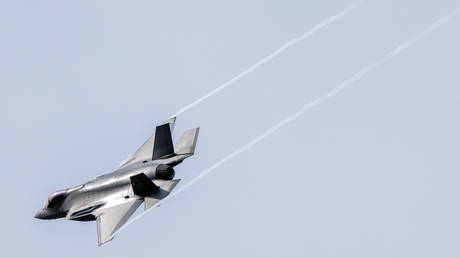
If you look closely at the data released by the Congressional Research Service, the types of airframes affected tell a fascinating story about modern aerial warfare vulnerability. High-tech stealth does not equal invulnerability. An F-35A Lightning II stealth fighter took hits from Iranian fire on March 19, proving that advanced coatings and radar-evading geometry cannot completely nullify dense, layered air defense networks.
Twelve F-15E Strike Eagle fighters also suffered damage or destruction. Three of those F-15s were actually shot down by friendly fire in Kuwait's airspace back in March, highlighting the chaotic nature of crowded skies when combat tempo spikes. Another F-15 went down over Iran the following month, and eight more sustained damage during a heavy missile barrage targeting an airbase in Jordan in September. Fortunately, ground crews managed to repair those eight and put them back in the air, but the repair turnaround time ate up critical maintenance bandwidth. To read more about the background here, The Guardian offers an excellent summary.
Aerial refueling assets took a massive beating too. Seven KC-135 Stratotanker refueling aircraft were lost or damaged. Without tankers, fighter jets cannot maintain long-range combat patrols. On March 14, a KC-135 crashed in Iraq, tragically killing all six crew members, while another barely limped home for an emergency landing. Six more refueling platforms took heavy hits during an Iranian bombardment of a US facility in Saudi Arabia.
Helicopters and special operations platforms also added to the tally. An AH-64 Apache was shot down over the Strait of Hormuz. Four light AH-6 Little Birds were written off during high-risk rescue missions, and an MH-60 Sea Hawk went down over the Arabian Sea in September. We also saw losses among support aircraft, including two A-10 Thunderbolt II attack planes, two MC-130J special operations transports, and an E-3 Sentry airborne warning-and-control aircraft.
Why does this matter so much right now? Because replacing these specialized airframes takes years, not weeks. Production lines for advanced fighters and support tankers are notoriously backlogged. When an E-3 Sentry or a KC-135 goes down, the strategic deficit ripples across every operational theater, forcing the military to stretch existing fleets thinner than planned.
As the conflict grinds forward, the Pentagon faces hard choices about asset allocation and force protection in the Middle East. Air superiority is never guaranteed, no matter how advanced your technology is.