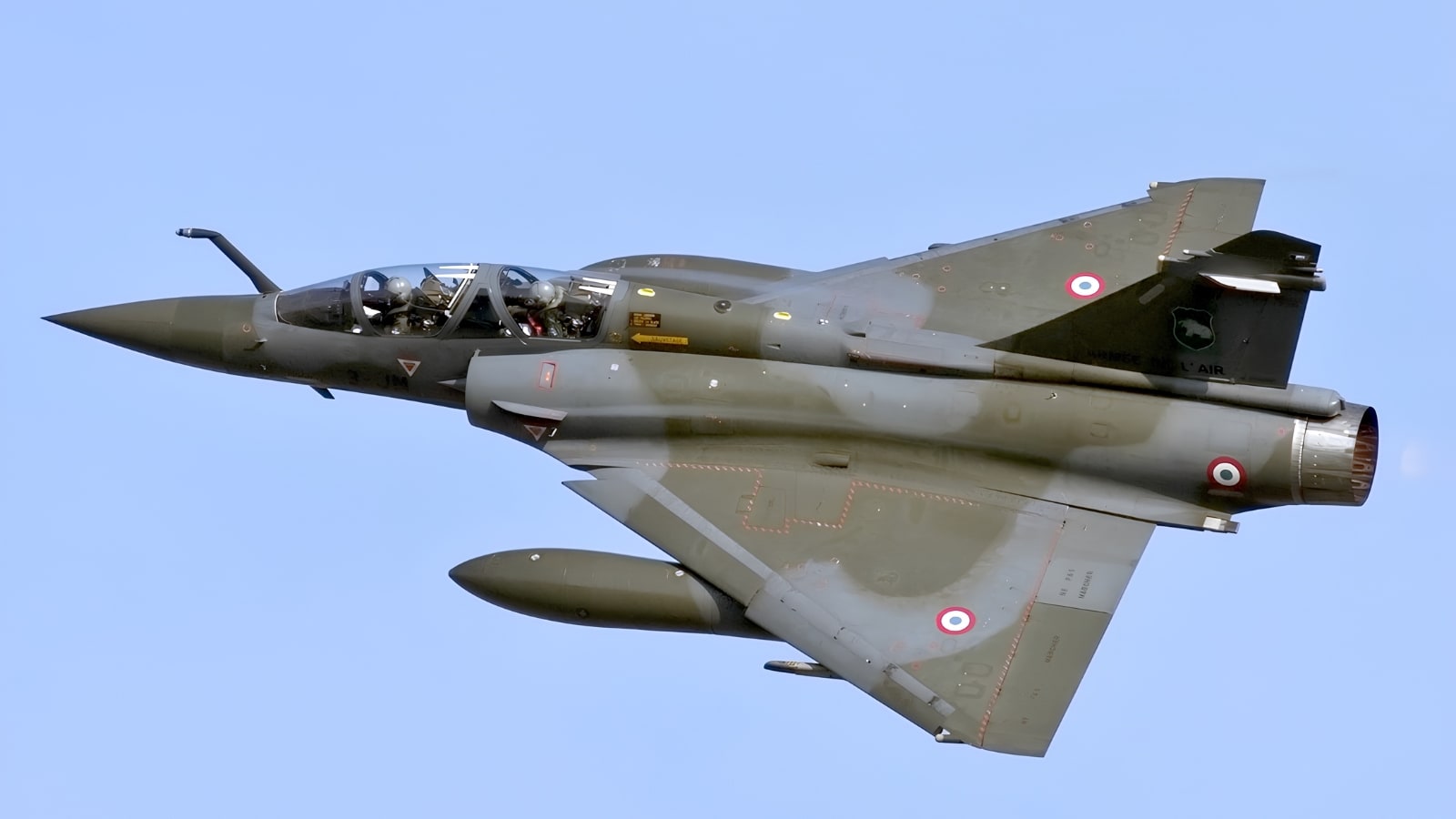
Military aviation doesn't forgive mistakes. When a French Air and Space Force Mirage 2000D fighter jet went down during a routine night training mission near Nancy, it shattered any illusion that peacetime military flying is inherently safe. Two experienced airmen lost their lives in the pitch black of the Meurthe-et-Moselle department. A 27-year-old pilot and a 44-year-old weapons systems officer never made it back to Nancy-Ochey Air Base, leaving an entire squadron grappling with a sudden, devastating loss.
Accidents like this force a brutal reckoning across defense circles. Everyone loves to talk about advanced stealth technology, multi-billion-dollar acquisition programs, and missile payloads. Nobody talks enough about the grueling, high-risk reality of flight training in adverse weather when the sun goes down.
The Anatomy of a Tragic Fighter Jet Night Mission
The flight started like dozens of others. On a Tuesday evening in late October, the two-seater Mirage 2000D lifted off for a tactical training exercise. Night sorties are standard protocol for maintaining operational readiness across NATO allies. Pilots need hours in the dark. They need to trust their avionics completely when visibility drops to zero.
Everything unraveled on the return leg. Air traffic control lost both radar and radio contact around 11:35 PM local time. There was no frantic mayday broadcast over the radio frequencies. The aircraft simply vanished from scopes as it approached the region north of Nancy near Rogeville and Domèvre-en-Haye.
Ground witnesses heard a terrifying noise before impact. Local residents reported a loud bang, like a sonic boom, followed by a brilliant ball of fire lighting up the night sky. The plane slammed directly into a densely wooded area.
When emergency responders arrived, they faced a nightmare scenario. Severe fog and brutal nighttime weather grounded search helicopters immediately. Ground crews had to push through muddy, wooded terrain on foot, relying on thermal drones to spot glowing debris and twisted wreckage.
Investigators from the Metz prosecution office confirmed the worst news shortly after. Neither crew member had time to eject. Ejection seat motors were recovered right at the impact crater, proving the catastrophic sequence happened too fast for manual or automated escape.
The Mirage 2000D Legacy
You can't discuss this crash without examining the aircraft itself. The Mirage 2000D entered service back in 1993. It's a twin-seat, ground-attack workhorse designed for precision strikes and complex operating environments.
France deployed these jets across the globe. You'll find combat histories stretching from Kosovo and Libya to Afghanistan, Iraq, and the Sahel region in Africa. They take a beating.
Paris recently poured millions into a massive modernization program. The goal was simple: keep the Mirage 2000D fleet flying sharp well into the 2030s until the Rafale fully takes over primary ground-attack roles. Upgraded cockpits, modern avionics, and fresh navigation systems were supposed to make these veteran jets safer and more reliable.
Yet hardware upgrades cannot cancel out the laws of physics or human physiology when darkness closes in.
Why Instrument Meteorological Conditions Kill
Flying a fighter jet at night over European terrain is entirely different from flying in clear desert skies. When low clouds roll in and artificial horizons vanish, pilots enter Instrument Meteorological Conditions.
Spatial disorientation hits fast. Your inner ear lies to you. Your brain tells you the plane is climbing when you're actually banking into a graveyard spiral. Trusting your instruments over your own physical senses sounds easy in a classroom. It's an entirely different battle when you're pulling high Gs in total blackness.
Air Force officials noted that weather conditions on the night of the crash were far from optimal. Fog choked the valleys. Visibility plummeted. While civilian commercial flights get canceled or diverted when weather turns sour, military pilots push through. Readiness demands it. Strategic deterrence demands it.
That relentless drive for absolute readiness carries a heavy human toll that commanders weigh constantly.
Inside the Cockpit Dynamics
The crew composition in this specific flight highlights how military aviation trains its next generation. You had a young trainee pilot with roughly 450 flight hours, working to secure final certification as an operational combat pilot. Sitting behind him was a heavily experienced weapons systems officer.
This pairing is standard operating procedure. Experienced navigators mentor younger pilots through complex tactical phases.
Training under pressure requires absolute trust between the front and back seats. When things go wrong in fractions of a second, communication needs to be instant. But if a sudden mechanical failure or severe spatial disorientation hits without warning, even decades of combined experience might not give the crew enough reaction time.
The recovery team found no evidence of an ejection attempt. That single detail tells aviation experts a chilling story. The emergency happened so fast that the crew never even reached for the yellow handles between their legs.
The Troubling Safety Record of Low-Level Training
This isn't an isolated tragedy in French military aviation history. Low-altitude night flying has claimed aircraft and lives before.
In January 2019, another Mirage 2000D crashed during a low-level night training flight in eastern France, killing both crew members. In July 2021, another crew near Nancy managed to punch out just in time before their jet hit the dirt.
Military brass love to point out that accidents are statistically rare given the thousands of hours flown each year. That argument feels hollow to the families of the fallen.
When defense budgets prioritize high flight hours to meet geopolitical tensions across Europe and the Middle East, safety margins shrink. Pilots get tired. Training schedules get packed tighter. Night slots are assigned when fatigue naturally peaks in the human circadian rhythm.
The Technological and Physiological Limits of Training
Peacetime military flying is never truly routine. Peacetime training mimics combat conditions precisely because pilots need muscle memory for the worst-case scenario.
When you fly tactical missions at night, you operate without lights, relying on night vision equipment or radar displays. You skim tree lines and valleys at high speeds. One miscalculation in barometric altitude reading or a split-second hesitation in instrument cross-checking turns fatal instantly.
Air forces across NATO struggle constantly with pilot retention. Experienced aviators retire early or jump to commercial airlines where pay is higher and schedules don't involve night sorties in freezing fog. This creates a demographic imbalance inside squadrons: fewer seasoned veterans mentoring a growing wave of young recruits.
How Simulators Are Changing the Equation
Modern defense departments talk endlessly about simulator hours replacing actual cockpit time. Simulators are incredible tools. They let pilots practice engine failures, electrical blackouts, and weapon system malfunctions without risking a multi-million-dollar airframe.
However, simulators have clear limits. They cannot replicate the physical G-force loading that strains a pilot's chest and pushes blood away from the brain. They cannot simulate the sensory claustrophobia of actual nighttime fog over unfamiliar European hillsides.
When a squadron loses an experienced weapons officer and a trainee pilot, the loss ripples far beyond base gates. Institutional knowledge vanishes in an instant.
What Military Leadership Must Change Now
You can't eliminate risk in combat aviation. Jets break under extreme stress. Weather turns brutal without warning. But you can change how training pipelines manage risk.
Defense ministries need to rethink the absolute rigidity of night flight quotas. If weather minimums are borderline, grounding training sorties shouldn't be viewed as a failure of grit. It should be seen as preserving irreplaceable human capital.
Spending more hours in high-fidelity simulators before pushing junior pilots into midnight tactical runs saves lives.
The judicial investigation into the Nancy crash will eventually publish its findings. Investigators will comb through flight data recorders, maintenance logs, and radio transcripts. They will find a root cause.
Until then, remember the human cost behind the headlines. Military deterrence isn't built on steel and jet fuel alone. It rests on the shoulders of people who strap themselves into fire-breathing machines every single night, hoping gravity doesn't win.