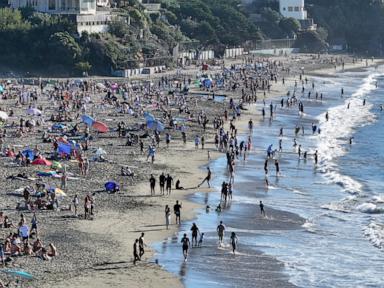
You expect crisp autumn air, pumpkin spice, and light jackets when October rolls around. Instead, millions of people across California are currently hiding indoors from blistering, mid-summer heat.
Right now, at least 37 million people are trapped under active heat alerts as a brutal, multi-day heat wave bakes the Golden State. We aren't just talking about a warm afternoon. Cities across Southern California are smashing daily high-temperature records that have stood for decades, turning early October into an endurance test.
If you are wondering why it feels like July in the middle of autumn, you are not alone. Let's break down what is happening, where the worst of it is hitting, and how to stay safe while this heat dome refuses to budge.
The Numbers Behind the October Crunch
When meteorologists look at weather anomalies, scale matters. This current weather pattern isn't just a minor blip. It is a stubborn ridge of high pressure sitting squarely over the western United States, acting like an invisible lid trapping hot air over California.
Over the weekend, the temperature spikes shattered long-standing marks:
- Anaheim and San Diego both scorched at 105 degrees.
- Santa Ana hit 107 degrees.
- Vista reached an incredible 108 degrees, breaking its daily record and tying an all-time record high originally set way back on June 30, 1985.
Cities like Los Angeles, Riverside, and Temecula are seeing widespread triple-digit readings. Even coastal spots aren't escaping the punishment, with areas near the beaches registering well into the 90s.
Why Fall Heat Waves Hit Harder
There is a psychological and physiological shock to late-season heat. By October, human bodies have acclimated to cooling evening temperatures. Trees and shrubs have started drying out. When an intense heat wave slams into a region that expected relief, the danger multiplies.
Overnight lows aren't dropping enough to offer relief. If your home doesn't have central air conditioning, concrete walls and asphalt absorb heat all day and radiate it back into your living space through the night.
Emergency management officials have extended excessive heat warnings in Southern California through Thursday evening. Furthermore, the heat won't just stay put. The thermal dome is expected to expand eastward across the Great Basin over the next few days, pushing temperatures into the 80s and 90s in neighboring areas.
How to Protect Yourself Right Now
When local weather services issue excessive heat warnings, they aren't exaggerating. Heat is historically one of the deadliest weather phenomena in the United States, often outpacing floods and hurricanes in fatalities.
If you live in the impacted zones, keep these tactical safety rules in mind:
- Reschedule outdoor chores: Do not try to mow the lawn or run errands during peak afternoon hours between 11 a.m. and 6 p.m.
- Check on vulnerable neighbors: Elderly residents and people without reliable air conditioning face immediate health risks when indoor temperatures skyrocket.
- Hydrate proactively: Waiting until you feel thirsty means you are already starting to dehydrate. Keep water with you at all times.
- Know the signs of heat exhaustion: Dizziness, heavy sweating, nausea, and rapid pulses mean you need to get into an air-conditioned space immediately.
Autumn is coming eventually. Until this ridge breaks down and moves out, keep cool and take the warnings seriously.