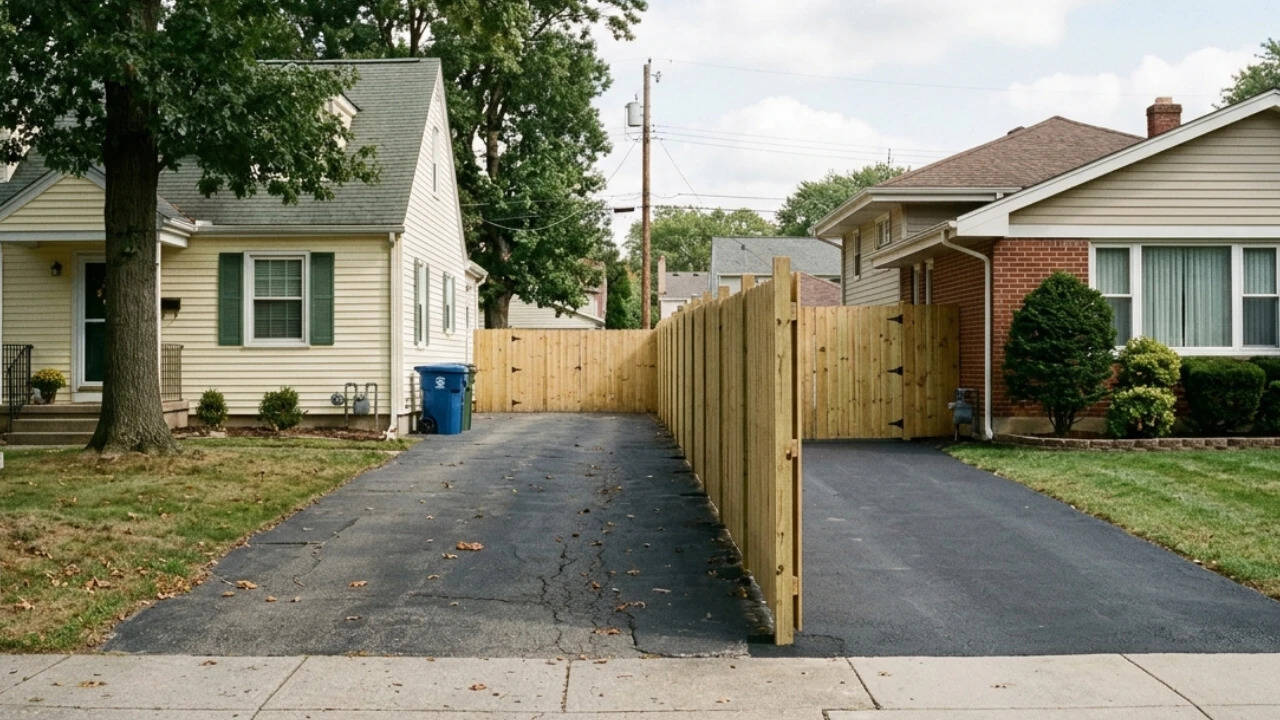
Shared driveways look great on paper until someone tries to build a fence right down the middle of them. Property disputes get ugly fast, but dragging your local municipal government into the crossfire is a whole different beast. Ask the McDonald family in Oak Hill, Tennessee. They won their property rights back from a neighbour, but federal courts just handed them a harsh reality check about suing city hall over a building permit.
Here is what most people get wrong about property easements, municipal liability, and why a zoning board approval doesn't give anyone a free pass to steal your land.
How a Neighborly Disagreement Turned Into a Backyard Cold War
The situation started in the City of Oak Hill within Davidson County. Mark, Nanette, and Madeleine McDonald owned a property featuring a house built in 1965. Right next door sat a home built in the 1950s, owned by Mary Rust. Since both homes went up, the properties shared a common driveway.
That arrangement relied on reciprocal easements. Each owner used the portion of the driveway sitting on the adjacent parcel. It worked for decades. Then real estate realities shifted.
Rust wanted to expand her property. Local zoning rules threw a wrench into her plans because land covered by an easement was excluded from plot size calculations. She needed that easement gone. When she asked the McDonalds to sign an agreement terminating it, they said no.
Property rights exist for a reason. If you own an easement, you do not give it away just because your neighbor wants to remodel.
Blocked by the refusal, Rust took a different route. She approached the city in July 2024 about putting up a fence along the boundary line splitting the driveway. A code enforcement officer told her she needed a permit and a site plan showing boundaries and easements. Initially, the city officials noted she could not build a fence through a driveway covered by an active easement.
The Paperwork Loophole and the Fence That Divided a Driveway
Rust didn't give up. She produced a Deed of Correction signed by previous owners of her property. This October 2024 document claimed a 1992 joint driveway agreement was never meant to be a binding easement for future owners.
The city attorney accepted this explanation. Municipal officials decided the paperwork was enough to bypass the easement dispute. They issued a building permit on November 21, 2024, and Rust promptly erected a fence right down the center of the shared drive.
The family watched half their driveway vanish behind metal and wood. They maintained the easement required mutual consent to dissolve. The city disagreed, choosing to rubber-stamp the permit and look the other way.
Winning the Real Battle in State Court
The McDonalds didn't just complain. They fought back where it mattered most for property law. On December 6, 2024, they sued Rust in the Davidson County Chancery Court. They demanded a declaration of their rights, along with claims for trespass, interference, and defamation of title.
They also tried appealing the permit to the Board of Zoning Appeals, which hit a dead end because zoning boards handle land use rules, not private property titles.
State courts offered actual justice. In September 2025, the family and Rust reached an agreed order. The court validated the driveway easement, threw out the dubious Deed of Correction, and ordered Rust to tear down the fence. By June 2026, they settled the remaining damage claims.
The neighborly war ended in victory. The driveway belonged to the shared arrangement once more.
Why Suing the City Over the Permit Went Nowhere
Winning against the neighbor wasn't enough for the family. They wanted accountability from the City of Oak Hill. They filed a separate federal lawsuit claiming that issuing the fence permit amounted to an unconstitutional government taking under the Fifth and Fourteenth Amendments. They argued the city failed to train code enforcement and actively favored developers over existing property rights.
US District Judge Aleta A. Trauger shut it down.
The federal ruling established a critical legal boundary. Yes, the family held a valid property interest. However, granting a building permit does not equate to a government taking of private property. A municipal permit authorizes construction; it does not settle property ownership or override existing civil easements.
The judge made it clear. Rust's decision to build the fence caused the loss of access, not the piece of paper issued by city hall. Even if the city acted negligently by handing out the permit before the civil dispute settled, that negligence did not cross the line into a constitutional violation. The court dismissed the case completely.
Lessons From a Tennessee Driveway Battle
Property disputes test your patience and your bank account. If you find yourself fighting a neighbor over an easement, keep these realities in mind.
Municipal offices are not civil courts. Code enforcement officers issue permits based on paperwork presented to them. They do not adjudicate property titles or verify whether a deed correction holds up under civil scrutiny. Expecting a zoning department to protect your private property rights is a losing strategy.
State courts resolve property title fights. Federal courts deal with constitutional violations. When a neighbor violates an easement, your remedy lies in civil court against the private party, not in federal court claiming the local government stole your land.
Protect your easements early. Keep records of your agreements, document every interaction, and be ready to litigate in state court the moment someone tries to fence you out.