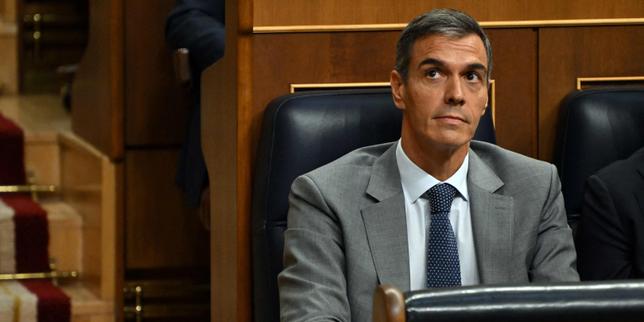
When a government can't pass its core legislation, leaders usually face a brutal choice. They can limp along in a paralyzed parliament or roll the dice on a snap election. Pedro Sanchez just chose the dice.
The Spanish Prime Minister announced on October 5, 2026, that the country will head to the polls for early general elections on November 29. This comes right after parliament flatly rejected two key executive decrees aimed at fixing Spain's runaway housing crisis. For Sanchez, it's a high-stakes gamble. He's betting that public anger can be redirected into ballot box survival, but the move carries massive risks for his socialist administration. For a different view, see: this related article.
When the Housing Crisis Becomes a Political Trap
You can't walk through Madrid or Barcelona right now without running into the reality of modern Spanish real estate. Rents are skyrocketing. Evictions are mounting. Foreign investment funds and short-term rentals like Airbnb are swallowing up residential housing stocks.
The tipping point hit just days before the election announcement. Tens of thousands of protesters flooded streets across Spain, demanding immediate government intervention and affordable housing. Renters are furious. Older tenants are being squeezed out of homes they've lived in for decades. Similar coverage on this matter has been shared by Wikipedia.
Sanchez tried to push emergency housing regulations through parliament to appease this exact anger. Instead, a bizarre coalition of the right, the far-right, and regional separatists shot the measures down. The message from the legislature was clear: Sanchez's minority government no longer has the numbers to govern effectively.
The Arithmetic of a Fractured Parliament
Running a minority government is a daily exercise in political acrobatics. Since taking power, Sanchez's Spanish Socialist Workers' Party (PSOE) has relied on a patchwork of alliances with left-wing factions, regional parties, and Catalan and Basque independentists. Every single vote requires grueling negotiations.
By late 2026, that architecture completely fractured. The parliamentary defeat proved that the opposition smelled blood in the water. Parties that agree on nothing else united simply to block the executive branch.
Sanchez is hoping November 29 changes the math. He wants a cleaner, wider mandate. But reality check: the left is deeply divided. Sumar and Podemos are squabbling over the exact same progressive voter base. If they split the vote, Sanchez's coalition could end up weaker than it is right now.
The Right Wing Threat and Other Pressures
The timing couldn't be tougher for the incumbent government. Beyond the urban housing revolts, Sanchez is battling headwinds from multiple directions.
Conservative opposition figures in the Partido Popular (PP) have been demanding early elections for months. Recent opinion polls show the PP leading the socialistic bloc, though they fall short of a clean majority. That means if the right wins, they might have to cozy up to the far-right Vox party to form a government.
Add to this a backdrop of lingering corruption scandals touching people close to the Prime Minister's inner circle, plus ongoing migration pressures at southern European borders, and you have a recipe for severe political volatility.
What Happens Next on November 29
Sanchez is playing his classic political card. He has survived multiple political near-death experiences before by trusting his tactical instincts when everyone else wrote him off.
Yet, gambling on an electorate furious about the cost of living and desperate for affordable apartments is a dangerous game. Voters want practical fixes to real estate inflation, not endless political maneuvering. If the upcoming campaign becomes just another shouting match about national identity and corruption, the housing crisis that triggered this mess will remain completely unsolved.
The ballot box will decide whether Sanchez is a political genius or a leader who finally ran out of time.