Forty-eight point three billion dollars sounds massive until you realize what that number actually leaves out.
Arthur Miller, the Pentagon's deputy comptroller and President Donald Trump's nominee for assistant secretary of the Navy for financial management, gave lawmakers that exact tally during a Senate Armed Services Committee confirmation hearing on November 19, 2026. Covering the campaign from late February through November 13, the $48.3 billion figure captures expended munitions, equipment replacements, and day-to-day operational expenses. That is already up roughly 26 percent from the Congressional Budget Office's $38 billion estimate back on August 1. Also making headlines in related news: What Most People Miss About The Gambia Fgm Backlash.
Here is the catch. It does not count the cost of repairing American military bases hit by Iranian missiles and drones. It ignores broader ripple effects across global energy markets and household budgets. And it says very little about how long it will take to rebuild depleted weapons stockpiles.
If you only read the headline, you miss the real financial shock of the Iran war. Additional information into this topic are covered by The New York Times.
What the $48.3 Billion Pentagon Tally Actually Covers
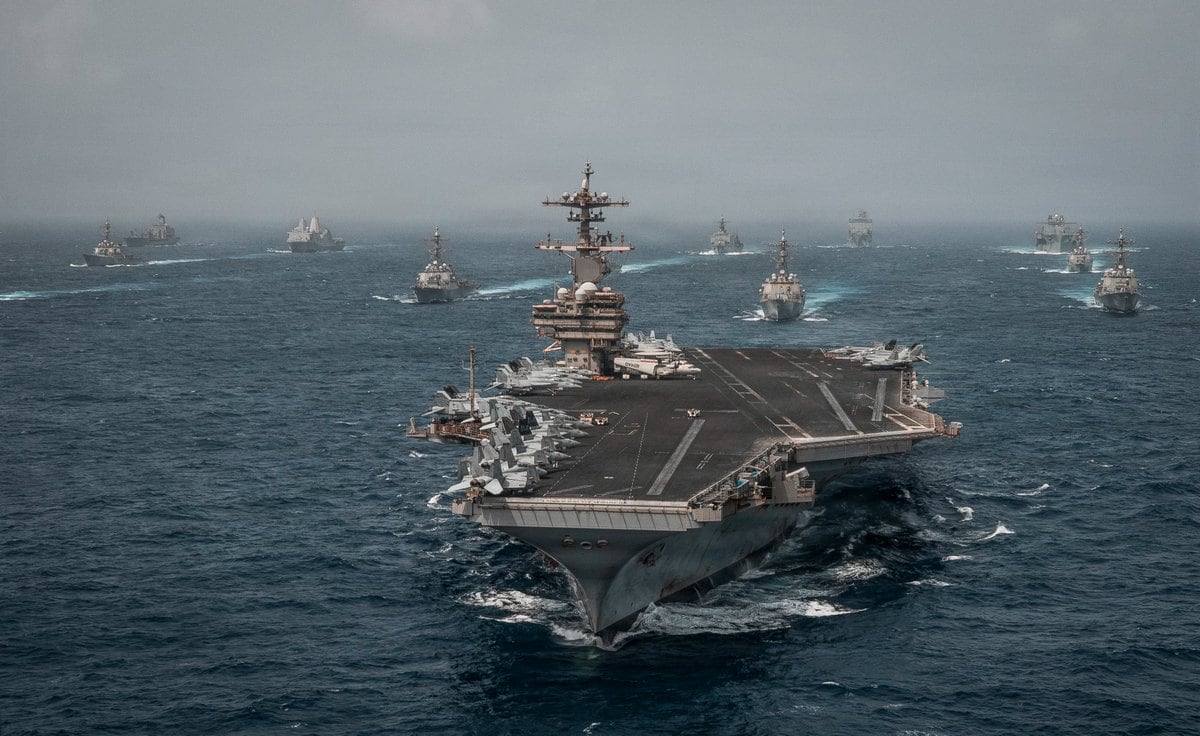
Defense accounting has its own quirks, and conflating direct campaign outlays with total national cost is one of the easiest mistakes to make in Washington. When a Pentagon comptroller offers a running war tab, that figure reflects direct military execution: flying sorties, steaming carrier strike groups, replacing lost gear, and firing interceptors or strike weapons.
By November 13, 2026, those direct expenses had crossed $48.3 billion—more than 5 percent of the annual U.S. defense budget. Earlier snapshots showed the pace climbing steadily from $37.5 billion in July to $38 billion on August 1, $43.6 billion in early September, and $47.1 billion in late October. Every phase of the conflict—the initial late-February offensive alongside Israel, the fragile April ceasefire, the June memorandum of understanding, stalled diplomacy, and the ongoing naval blockade of Iranian ports—has kept the meter running.
What doesn't show up on that ledger is base reconstruction. During Miller's hearing, Sen. Richard Blumenthal pressed on damage to American installations in the Middle East struck by Iranian drones and missiles. Miller acknowledged those repair expenses were outside the $48.3 billion estimate and said he did not have a figure for them. In defense budgeting, unpriced facility damage is a classic blind spot early in a conflict; engineers often cannot tally full structural and hardened-shelter costs until assessments stabilize or supplemental requests are drafted.
Munitions Stockpiles and the Multiyear Hangover
Buying a replacement missile or interceptor isn't like ordering extra office supplies. Even when money is authorized, production lines move at industrial speed, not political speed.
An analysis published on November 10, 2026, by the Center for Strategic and International Studies (CSIS) highlights how uneven that recovery picture looks. Against Iran alone, U.S. munitions stockpiles remain sufficient to sustain operations if fighting resumes. Against China—the benchmark defense planners watch closely for high-end deterrence—the strain is far more worrying.
Certain high-demand interceptors and precision strike systems take years to backfill because factory output was modest before the crisis began. Even with framework agreements aimed at expanding production—such as efforts involving RTX to scale SM-3 IIA output and push SM-6 manufacturing up toward 500 units per year—returning key inventories to prewar baselines stretches into the late 2020s or early 2030s for several systems.
Early in the campaign, the U.S. relied heavily on expensive precision munitions to suppress defenses before shifting toward more plentiful options like air-launched JDAM gravity bombs. Yet the April pause gave Iranian forces time to dig out underground facilities and bring previously inaccessible drones, missiles, and defenses back online. That dynamic is why war costs don't neatly taper off just because major air campaigns pause. Blockades, patrol rotations, air defense readiness, and intelligence operations keep burn rates elevated.
The Hidden Price Tag at the Pump and in Household Budgets
Ask any family filling up a tank of gas or paying a utility bill whether the conflict costs $48.3 billion, and they'll laugh—or groan. From an economic standpoint, Pentagon outlays are only the opening act.
The war has disrupted commercial shipping through the Strait of Hormuz, a chokepoint vital to global crude and liquefied natural gas flows, while Houthi attacks in Yemen have threatened regional shipping and Saudi oil infrastructure. Meanwhile, U.S. naval forces enforce a blockade on Iranian ports. Energy markets price in supply risk fast.
Analyses from institutions like the Center for American Progress and research tracking fuel prices—including the Brown University Iran War Energy Cost Tracker and estimates cited from economist Mark Zandi—point to substantially larger household and macroeconomic burdens once higher gasoline, diesel, jet fuel, natural gas, and interest-rate pressures are factored in. Even when analysts disagree on exact modeling assumptions or attribution, one point is hard to dispute: a war near major energy arteries acts like an indirect tax on consumers and importers worldwide.
Why Washington Is Fighting Over the Bill
Whenever a military campaign stretches past a few weeks, budget politics get loud. In Congress, lawmakers across party lines have clashed over war powers, supplemental funding, and whether the administration has laid out a clear endgame. Critics argue tens of billions of dollars could have gone toward domestic priorities like healthcare subsidies or deficit reduction, while supporters contend forceful pressure and naval blockades are necessary to compel Tehran's concession without an open-ended ground war.
Honestly, that debate exposes a recurring flaw in how conflicts are sold versus how they're funded. Leaders often project speed and containment at the outset, while real-world friction—underground bunkers, maritime chokepoints, retaliatory strikes—turns a short campaign into a prolonged financial commitment.
Practical Next Steps If You're Tracking or Planning Around This
You don't need a security clearance to read the signals here smarter than most commentary does. If you're following defense policy, investing, or managing business costs, take these concrete steps:
- Separate direct Pentagon outlays from total economic cost. Always check whether a quoted figure covers only DoD operations and munitions or includes base repairs, energy price spikes, and macroeconomic drag.
- Watch supplemental and FY 2027 defense appropriations closely. Comptroller estimates track what has already been spent or obligated; real clues about next year's tempo lie in congressional reconciliation bills, munitions procurement lines, and replacement timelines.
- Stress-test fuel, freight, and supply-chain exposure. If your business or household budget relies heavily on diesel, air freight, imported goods, or energy-intensive inputs, build in price buffers rather than banking on an immediate drop back to pre-February energy levels.
- Follow independent defense and economic trackers. Read primary budget justifications and analyses from nonpartisan institutions alongside news wire reports so you can spot where political spin ends and hard numbers begin.