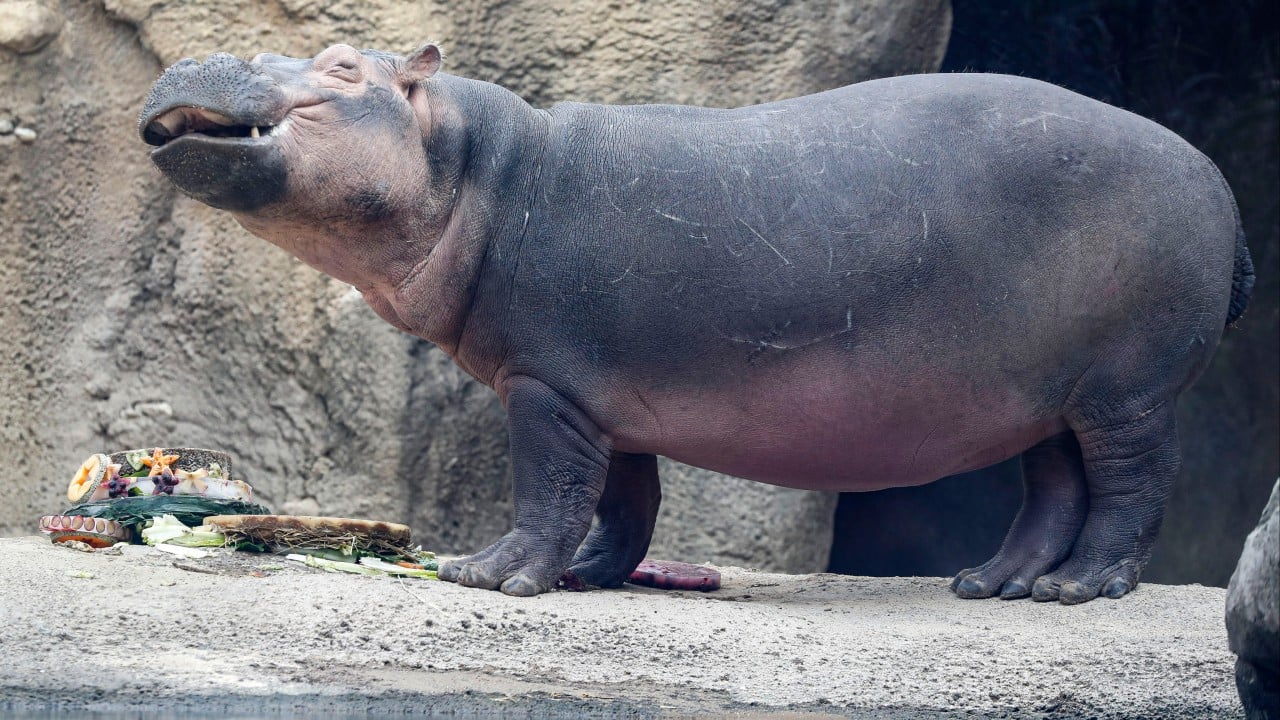
Millions of people woke up to devastating news out of Ohio. Fiona, the world-famous hippopotamus who captured global hearts after beating incredible odds as a premature newborn, has died at the Cincinnati Zoo.
Her death wasn't caused by old age or illness. Instead, it was a freak accident that unfolded over eleven agonizing days. A visitor tossed a knit cap into the air, a ceiling fan caught it, and the wind-blown hat sailed through a narrow opening directly into Fiona's enclosure. The nine-year-old hippo swallowed it. What followed was a frantic, round-the-clock medical race that ultimately ended in heartbreak.
A Freak Accident Built on an Impossible Chain of Events
Zoos spend decades engineering habitats to keep animals safe from outside hazards. But nobody plans for a ceiling fan to act as a projectile launcher.
Roughly eleven days before her death, a child threw a winter hat upward. The overhead fan redirected the cap with enough velocity to clear a one-foot gap above the twelve-foot-high viewing windows. Fiona, curious like any animal, investigated the foreign object and ingested it.
Zoo staff noticed changes in her behavior and appetite almost immediately. What seemed like a bizarre, isolated mishap quickly escalated into a full-scale medical emergency.
Why Veterinary Science Hit a Wall
When people heard Fiona had swallowed a hat, the immediate public reaction was simple: just operate and take it out. Real veterinary medicine doesn't work that way, especially with a massive Nile hippopotamus.
Specialists weighed in as the crisis deepened, explaining the nightmare scenario of hippo anatomy. Hippos possess complex, multi-chambered stomachs. They digest plant matter similarly to ruminants like cows, but they lack the ability to regurgitate and chew cud. Those internal folds, fluids, and dense layers of digesting vegetation easily trap and hide foreign objects.
Furthermore, surgery on an adult hippo is extraordinarily dangerous. Their skin measures over two inches thick in places. Anesthesia management for large aquatic mammals carries massive risks. Because veterinarians couldn't pinpoint exactly whether the hat was lodged in her stomach, small intestine, or colon, a surgical intervention would have required multiple long, invasive incisions across her entire digestive tract. Post-surgery recovery also demands keeping a hippo completely out of water for days to let wounds heal—an immense stressor for an animal whose biology relies on aquatic environments.
Veterinarians tried everything short of open surgery. They sedated her twice to run diagnostics. They performed an ultrasound showing that her intestines were bunching up as she struggled to pass the obstruction. They used a nine-foot scope for a colonoscopy. Caretakers even offered her a whiff of coffee—a scent she historically loved—just to monitor her responsiveness.
Nothing worked. Her system could not clear the obstruction.
The Legacy of a Fighter
To understand why this loss feels so personal to millions, you have to remember how Fiona entered the world. Born six weeks premature in January 2017, she weighed a tiny 29 pounds—roughly 25 pounds lighter than the lowest recorded birth weight for her species at the time.
Most animals born that weak do not survive. But the Cincinnati Zoo team built a makeshift ICU, teaching her how to swallow, keeping her hydrated, and nursing her through round-the-clock shifts. Videos of her shaky first steps went viral. She became an international symbol of resilience, inspiring children's books, merchandise, and a fiercely loyal fanbase who watched her grow from a fragile, orange-sized baby into a massive, majestic adult. When her younger brother Fritz was born years later, it felt like an extension of the family portrait fans had invested their emotions into.
The Broader Danger Behind Zoo Tragedies
Fiona's death highlights a quiet, ongoing hazard that institutions face worldwide. Objects dropped or thrown into animal enclosures routinely turn lethal.
Zoos have sounded alarms about foreign debris for years. A rare antelope in Tennessee died after swallowing a plastic lid from a squeezable fruit pouch. A polar bear in Germany lost its life after a visitor dropped a jacket into its habitat. Animals explore the world using their mouths. When synthetic fabrics, plastic wrappers, or clothing items land inside an exhibit, curious wildlife treat them like food.
The Cincinnati Zoo community is grieving a beloved icon. Keepers who spent nearly a decade watching her defy the odds are left picking up the pieces.
Pay attention to your surroundings when visiting wildlife habitats. Keep a tight grip on personal items. A dropped hat or a discarded wrapper might seem harmless in the moment, but the consequences can ripple out further than anyone imagines.