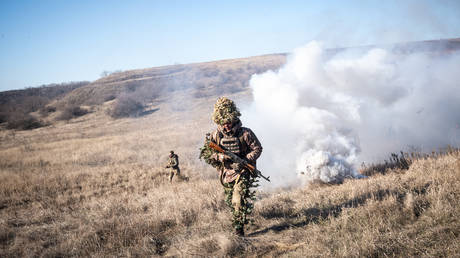
For more than four and a half years, truces in Ukraine have lasted about as long as a dry twig under a boot. Every single promise of quiet has dissolved into artillery fire and mutual recrimination. That makes what is happening right now in Oleshky genuinely bizarre.
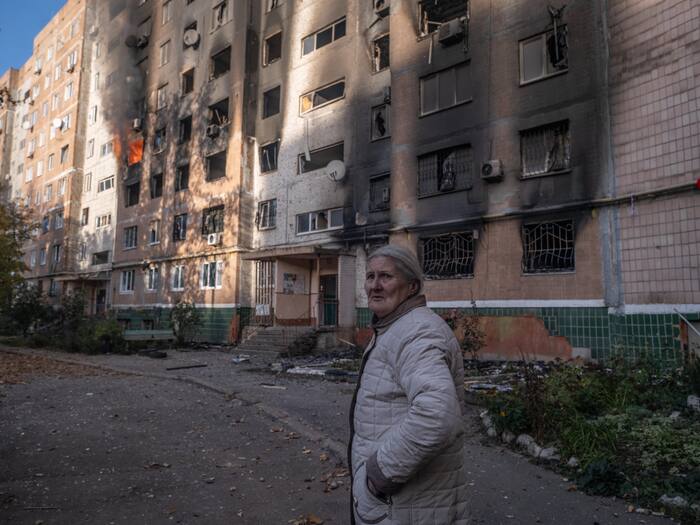
In the Russian-occupied southern city of Oleshky, a planned six-day humanitarian ceasefire has held firm past its initial 30-hour mark. Officials from both sides confirm the guns are actually silent in that specific pocket of the Kherson region. But do not mistake this local pause for a sudden outbreak of peace. While food and medicine crawl toward the roughly two thousand civilians trapped inside, the wider war is raging with terrifying intensity everywhere else. Moscow and Kyiv are simply holding their breath, waiting for Washington to set the calendar for high-stakes technical talks in the United Arab Emirates.
Breaking Down the Oleshky Humanitarian Mission
The mechanics of this rare pause are delicate. Negotiated with high-level diplomatic nudges from the White House—specifically involving U.S. First Lady Melania Trump, which earned rare joint thanks from both Russian and Ukrainian camps—the operation is designed to save lives in a shattered zone. Pope Leo XIV also leaned on Presidents Volodymyr Zelenskyy and Vladimir Putin earlier this month, pressing them to open a humanitarian corridor.
The plan relies on a unique tripartite setup. Once de-mining crews clear the roadway, representatives from Ukraine, Russia, and the United States will go into Oleshky together. Ukrainian Ombudsman Dmytro Lubinets and his Russian counterpart, Yana Lantratova, both confirmed that no violations had broken out during the opening hours. Evacuated residents are supposed to choose freely whether they head toward Ukrainian-held territory or into Russian-held regions, though verifying how smoothly this runs on the ground remains difficult given strict occupation rules.
The Real Game is Happening in Abu Dhabi
While aid workers focus on Oleshky, the political chess pieces are moving toward Abu Dhabi. U.S.-led technical talks are expected next month to map out paths toward ending the grinding conflict. Zelenskyy indicated that the timeline is currently dangling on events in the Middle East, with dates eyed between November 6 and 10, right after the U.S. midterms.
Putin's foreign affairs adviser, Yuri Ushakov, made it clear that European representatives will not get a seat at the table. Analysts point out the obvious strategy here: Moscow wants to bypass European capitals entirely and negotiate the architecture of Ukraine's future directly with Washington. Meanwhile, European leaders are finding backdoor channels. Finnish and Norwegian leaders recently placed direct phone calls to Putin, finding out that the Kremlin might actually be serious about discussing energy infrastructure pauses and commercial sea traffic rules.
Shifting Alliances and Supply Strains
Kyiv is facing severe pressures behind the scenes. Zelenskyy made no secret of his frustration regarding U.S. disengagement. The ongoing conflict in the Iran region has drained American stockpiles of Patriot air defense systems. Ukraine is receiving a fraction of the interceptors it used to get—averaging around 12 missiles a month while facing hundreds of incoming threats. Intelligence sharing and satellite links have also seen disruptions, compounded by recent U.S. trade agreements involving Russian diesel.
Contrast that strain with a massive influx of support from across the Atlantic. The United Kingdom just stepped up with an additional 10 billion pounds in financial backing, leaning heavily into weapon supplies and economic defense over the next three years. Zelenskyy publicly praised British leadership, drawing a sharp line between allies who are standing firm and those pivoting away.
The War Does Not Stop
Do not let the quiet streets of Oleshky fool you. Across the rest of the country, the machinery of destruction is operating at full tilt. Overnight, a jet-powered Russian drone strike hammered Kharkiv, tearing into apartment blocks, private homes, and industrial sites, wounding five people including a young child.
In Russia, the defense ministry claimed air defense units intercepted over 500 Ukrainian drones across multiple regions in a single wave, causing civilian injuries and property damage.
The Oleshky ceasefire is a humanitarian lifeline for two thousand desperate people, but it is an anomaly. The fundamental demands of Moscow and Kyiv remain lightyears apart. Until those delegations sit down in Abu Dhabi, every local truce is just a brief pause before the next barrage.