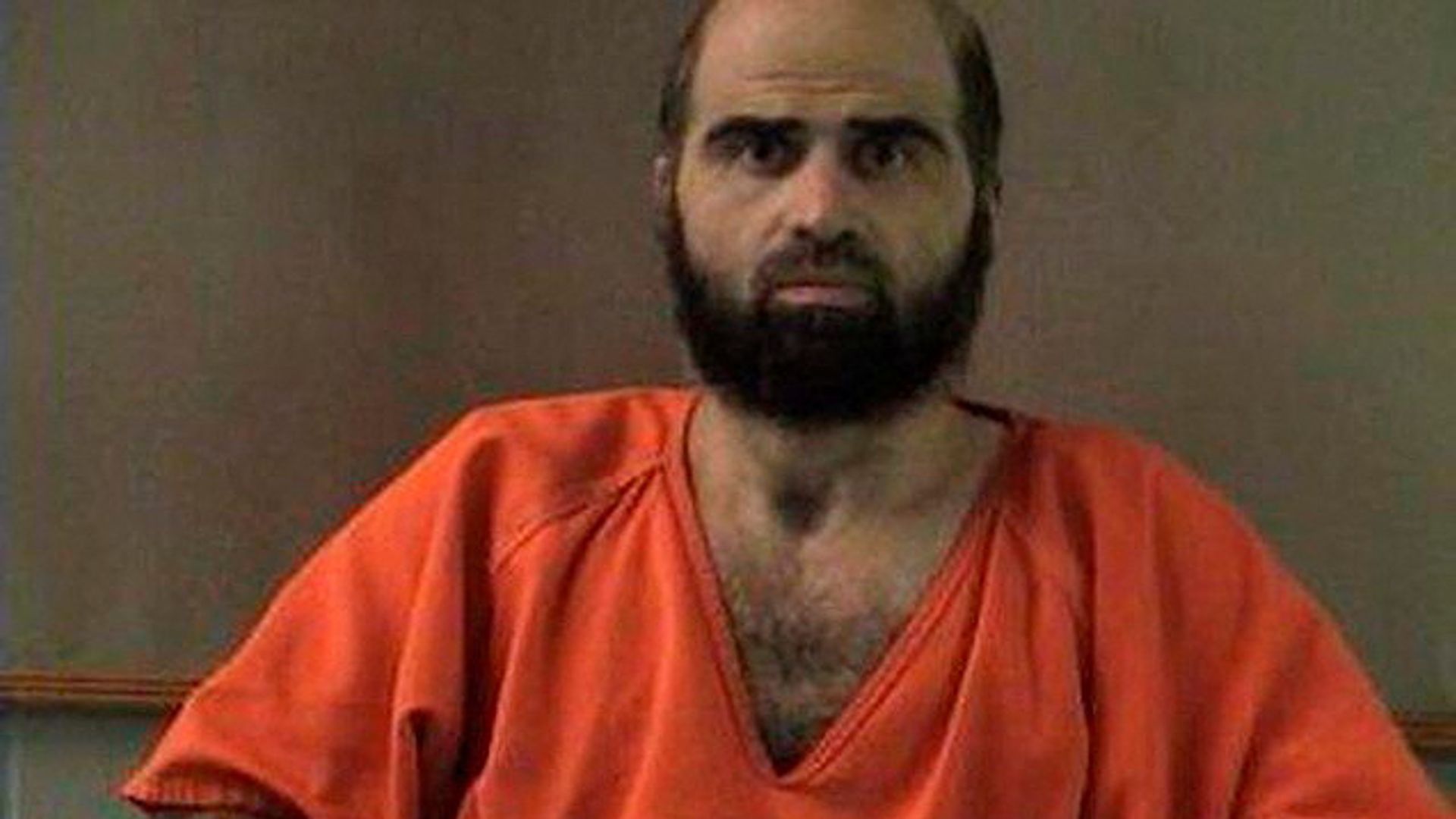
President Donald Trump has officially approved a rare firing squad execution for Nidal Hasan, the former Army psychiatrist convicted of murdering 13 people and wounding 32 others during a 2009 rampage at Fort Hood, Texas. This decision marks a massive shift in military justice, setting up what will be the first execution of a U.S. soldier by court-martial since 1961.
If carried out, the execution will shatter decades of precedent regarding how military capital punishment is administered. Here is what you need to know about the case, the method, and why this development matters right now.
The 2009 Fort Hood Attack Revisited
The tragedy happened on November 5, 2009, at a soldier readiness processing center on the Texas military base. Troops were preparing for deployment when Hasan opened fire while shouting "Allahu Akbar."
Twelve active-duty soldiers and one civilian contractor lost their lives. More than 30 others sustained injuries before a civilian police officer shot and paralyzed Hasan, ending the carnage.
During his 2013 court-martial, Hasan openly admitted to the shooting. He stated that he targeted his fellow service members because he viewed them as opposing the Islamic Empire. A military jury convicted him on 13 counts of premeditated murder and 32 counts of attempted premeditated murder, sentencing him to death.
For over a decade, Hasan sat on death row at the U.S. Disciplinary Barracks at Fort Leavenworth, Kansas. His final appeal to overturn his death sentence was rejected in early 2025. Following a formal push from defense leadership, Trump cleared the final hurdle for the sentence to proceed.
Why a Firing Squad
Lethal injection is the standard method used in most federal and state executions today. However, military regulations and broader legal frameworks sometimes accommodate alternative options.
The decision to use a firing squad brings an archaic form of capital punishment back into the spotlight. The last U.S. military execution occurred in 1961 when Private John Bennett was hanged for rape and attempted murder. True military firing squad executions date back even further, with the last known instance taking place during World War II in 1945.
Choosing a firing squad over lethal injection often stems from logistical hurdles surrounding lethal drugs, or specific legal challenges mounted by inmates regarding vein access and botched executions. Inmates have occasionally requested firing squads themselves to avoid the complications sometimes associated with chemical injections.
The Broader Impact on Military Law
Capital punishment inside the United States military is exceptionally rare. While thousands of service members faced execution throughout history, convictions and subsequent approvals from the commander-in-chief have dropped to near zero in the modern era.
This decision sets a precedent for how high-profile military crimes are handled under the current administration. The Secretary of the Army will determine the exact time and place for the execution to be carried out at Fort Leavenworth.
The legal battles are effectively over. Judgment day has arrived for Nidal Hasan.