Putting Donald Trump, Xi Jinping, and Vladimir Putin in the same room at Shenzhen's Kylin Villa during the APEC summit didn't just break a diplomatic taboo. It sent a blunt message about how Washington now views global power.
For decades, American policymakers treated Beijing as a strategic rival to be shaped and Moscow as a diminished power to be contained. Sitting across from Xi and Putin in a first-ever trilateral summit on November 19, 2026, Trump leaned into a very different framing. Treating China and Russia as peers of the US isn't a slip of the tongue. It's a deliberate shift toward great-power transactionalism that treats major crises as bargaining chips rather than moral or ideological tests.
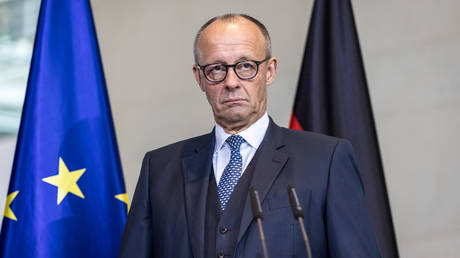
Look closely at that backdrop in Shenzhen. Three flags, three leaders standing side by side under a banner reading China-Russia-U.S. Shenzhen Summit. Even if European leaders like German Chancellor Friedrich Merz dismissed the optics as a photo op, optics carry weight in international politics. For Moscow, isolated by sanctions and an International Criminal Court arrest warrant, simply standing beside the US and China on equal footing is a massive boost in perceived legitimacy.
What Calling China and Russia Peers Actually Means
In diplomacy, words aren't just decoration. When an American president treats Xi and Putin as peers, he's implicitly signaling that the old hierarchy—where Washington sets the rules and expects allies and rivals alike to adapt—no longer defines how he wants to negotiate.
Honestly, this fits a pattern we've seen throughout Trump's second term. Rather than leaning on traditional alliance frameworks or lecturing authoritarian governments on domestic governance, Trump tends to deal leader to leader. Analysts examining his second-term foreign policy, including researchers writing in Journal of Contemporary China and commentators at the Council on Foreign Relations, point out that he approaches major powers through personal rapport, leverage, and dealmaking rather than long-standing ideological guardrails.
That approach comes with real trade-offs. Calling two major powers "peers" sounds pragmatic if you believe talking beats stonewalling. Trump himself made that case at the opening of the talks, arguing that problems aren't solved by refusing to sit down and talk. Yet elevating Moscow and Beijing to equal status also blurs the line between a superpower that anchors a broad network of treaty allies and two states that routinely challenge Western norms and territorial sovereignty.
Why Did This Trilateral Happen in Shenzhen Now?
Timing explains almost everything about why these three men met in southern China on the sidelines of APEC. None of the three leaders walked into Kylin Villa from a position of effortless dominance.
- Washington's crowded plate: Trump arrived amid ongoing friction with Iran, high-stakes trade and tech tensions with Beijing, and a US-China trade truce set to expire on January 10, 2027. Engaging Xi and Putin allowed Trump to push for nuclear risk discussions and keep channels open before major deadlines hit.
- Beijing's balancing act: Hosting the summit let Xi project calm centrality on home turf while avoiding deep entanglement in messy wars like Ukraine or Iran. As China experts at the Council on Foreign Relations note, Beijing gets symbolic prestige from hosting without signing up to solve Washington's headaches.
- Moscow's search for leverage: Now well into its full-scale war in Ukraine, Russia faces heavy strain, yet Putin still holds nuclear weight, energy supplies, and a seat at the table. Sharing a stage with Trump and Xi let Putin project relevance even without announcing a breakthrough.
Did the Summit Produce Real Breakthroughs or Just Headlines?
If you expected a sweeping peace deal or a binding arms control treaty out of Shenzhen, you're looking in the wrong place. The four-point joint declaration issued by the three leaders focused on broad themes: reforming the United Nations, boosting refined petroleum supplies, respecting state official immunities from bodies like the International Criminal Court, and holding dialogue to reduce nuclear risks.
Notice what wasn't in the formal statement. Neither Ukraine nor Iran made it into the joint declaration, even though conflict in both regions hangs heavily over global security. Putin said afterward that Ukraine came up in the room, while Trump has repeatedly pushed to bring China into nuclear arms discussions—a goal Beijing has long resisted in favor of broader risk-reduction talk rather than formal caps on its growing arsenal.
The pushback on international courts deserves extra attention. Attacking overreach by the International Criminal Court and stressing state immunity aligns neatly with interests shared by leaders who resent external legal pressure. For allies in Europe and beyond who view international institutions and collective security as vital guardrails, that language is a red flag.
What People Get Wrong About a "G3" World
Whenever a rare three-way meeting happens, pundits love reaching for big labels—calling it a new Yalta or a formal G3. Both comparisons miss how messy reality actually is.
First, a photo together isn't a unified bloc. Washington, Beijing, and Moscow have competing interests across Asia, Eastern Europe, energy markets, and advanced technology. Russia and China cooperate closely on trade and diplomacy, yet their long-term ambitions in Central Asia and the Arctic aren't identical. Meanwhile, US allies in Europe and the Indo-Pacific—places like Japan, South Korea, Germany, and Poland—watch every signal from Washington closely to see how security commitments hold up.
Second, "peers" in one arena doesn't mean equals in every arena. In nuclear weapons, Russia and the US still hold the vast majority of strategic warheads, while China's arsenal is expanding rapidly. Economically and technologically, the US and China operate on a completely different scale than Russia, even as energy flows keep Moscow relevant.
In my experience reading diplomatic summits, the biggest mistake people make is confusing access with alignment. Sitting at the same table doesn't mean the three leaders agree on the future map of the world. It means each one thinks talking serves their immediate leverage right now.
Practical Ways to Track What Comes Next
Don't judge the Shenzhen meeting by its broad peace language. Watch concrete milestones over the next few months to see if any real policy shifts follow:
- Watch the January 10, 2027 US-China trade truce deadline: See whether Washington and Beijing negotiate a broader economic framework or slide back toward sharper tariff and tech friction.
- Track the upcoming G20 gathering in Miami: Pay attention to how Trump and Xi follow up in December 2026, and whether follow-through actually happens on nuclear risk talks.
- Check separate tracks on Ukraine and the Middle East: Look past joint summit statements to see whether bilateral talks or regional diplomacy produce tangible movement or stall out again.
Big summits make loud headlines. Real shifts in power show up in what happens the week after everyone flies home.
APEC Summit: Lots of gloss, little real progress? • FRANCE 24 English
This video adds visual context on the Shenzhen summit's diplomatic optics and explains why analysts are debating whether the meeting produced substantive breakthroughs or mostly symbolic posturing.