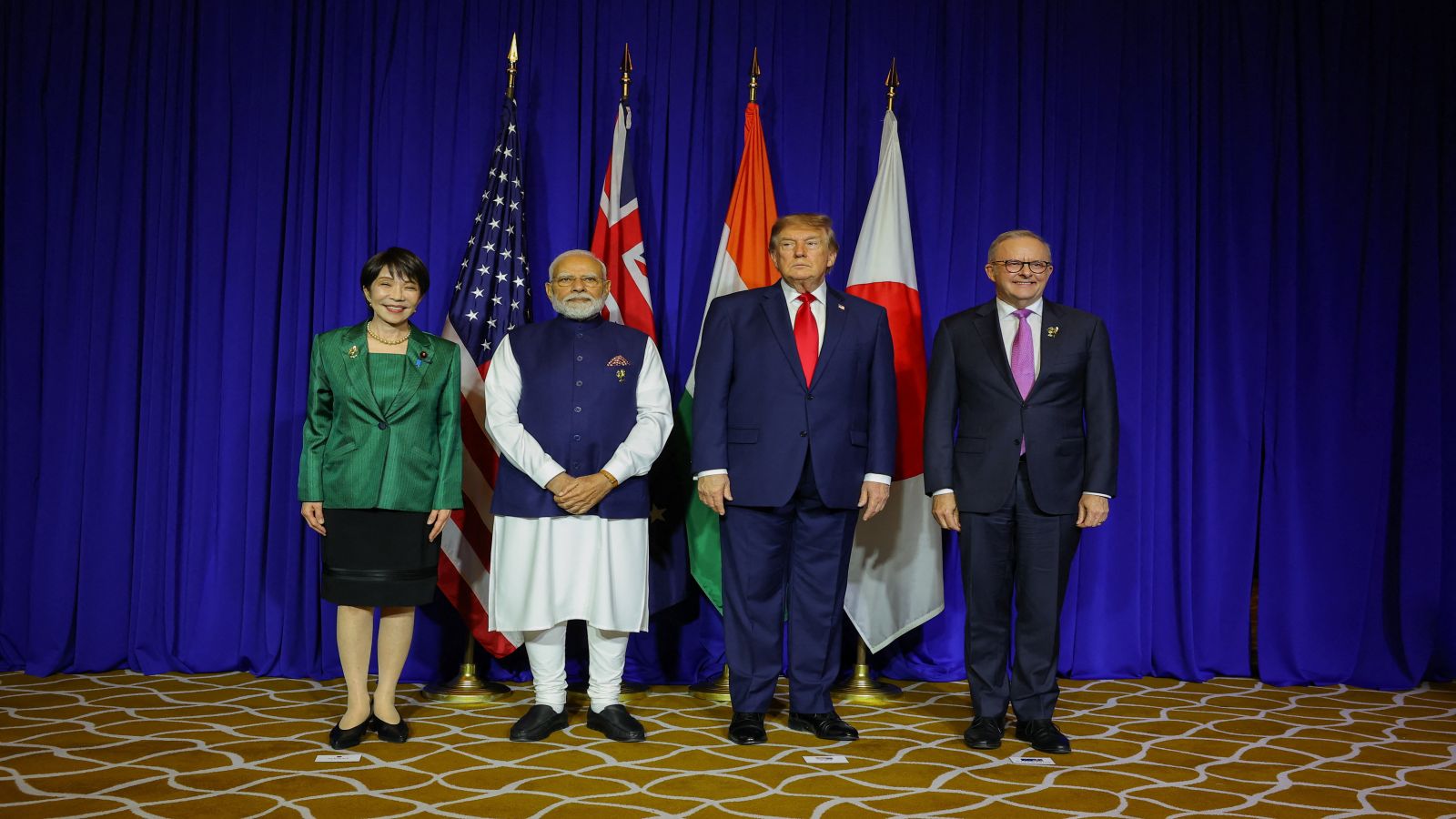
Donald Trump walked into the Quad Leaders' Summit in Manila on the sidelines of the 49th ASEAN Summit, and half of Washington immediately tried to read tea leaves. Was he locking in the Quad commitment for good? Or was he just checking a box before talking to Beijing?
Former Indian Ambassador to the United States Meera Shankar cut straight through the noise. According to her assessment after the Manila readout, Trump showing up in person after a two-year gap between leader-level Quad summits signals real political weight, even if questions hang over whether Washington will back that signal with steady policy.
Honestly, that tension is the whole story.
What Actually Happened in Manila
Before the leaders sat down in Manila, Trump stood next to Indian Prime Minister Narendra Modi, called him "very tough," and praised personal ties with Modi, Japanese leader Sanae Takaichi, and Australian Prime Minister Anthony Albanese. First in-person Quad leaders' meeting since 2024. Big optics.
Inside the room, the grouping didn't just issue vague warm words about Indo-Pacific stability. Trump rolled out four initiatives centered on artificial intelligence, maritime security, critical minerals, and cybersecurity. They also flagged pushback against economic coercion—code, as anyone watching supply chains knows, for Beijing's chokehold on processing and export controls.
One concrete piece stood out: a $10 million critical minerals recycling plan aimed at giving India and ASEAN countries more breathing room outside single-source supply chains. Ten million dollars won't rebuild a global rare-earth refinery network overnight. Not even close. Still, it shows where the grouping is trying to put actual wiring instead of just press-release slogans.
Why Meera Shankar's Take Hits Different
If you've followed diplomatic commentary over the last couple of years, you know plenty of analysts argued Trump wasn't personally invested in the Quad. Critics pointed out that his second-term National Security Strategy looked softer toward China than hawks expected, while his broader instinct leaned toward working out "strategic stability" directly with Beijing.
Meera Shankar didn't pretend those doubts vanished in Manila. She pointed out that Trump had been loath to attend a Quad leaders' summit earlier, making his appearance right before his China engagement politically meaningful. At the same time, she flagged a real gap between atmosphere and follow-through.
Think about what India and its partners have dealt with recently. Sudden US tariffs hit Indian exports after Trump took office, rattling nerves in New Delhi. On tech transfer and treating India as a partner of true strategic consequence, Washington hasn't always looked forward-leaning. Shankar called out what looks like strategic incoherence—blowing hot and cold on allies and partners while trying to keep channels open to China.
That's a sharper read than "Trump loves the Quad" or "Trump hates the Quad." Both instincts can live in the same administration at once.
Security, AI, and Critical Minerals Aren't Separate Files
One mistake people make when tracking the Quad is treating security and economics as two separate buckets. Ships in the South China Sea get headlines, sure. So do maritime domain awareness programs and cybersecurity drills.
Yet critical minerals and AI sit right next to patrol boats now. If one country dominates rare-earth refining, battery inputs, or specialized semiconductor supply chains, it can squeeze neighbors without firing a shot. Look at the broader tech friction around AI chips, export rules, and espionage allegations involving China—including controversies around Nvidia hardware—and you see why Quad planners treat compute and minerals as national security infrastructure.
For India, this intersection cuts two ways:
- Opportunity: Deeper Quad coordination on AI, semiconductors, and mineral recycling gives Indian firms and labs access to capital, standards, and partner markets.
- Friction: Tariff disputes, uneven tech-sharing rules, and bilateral trade spats can stall goodwill fast if capitals treat partners like bargaining chips.
What People Get Wrong About the Quad's Future
Whenever a US president shifts tone, pundits declare the Quad dead or reborn. Both takes miss how this grouping actually works.
The Quad isn't NATO. There's no mutual-defense treaty, no joint command structure on paper, and no expectation that all four capitals see China identically on every Tuesday. When Trump 2.0 prioritized bilateral talks with Beijing, skeptics assumed the Quad would wither on the vine.
Instead, foreign ministers met multiple times across 2025 and 2026—including in New Delhi—keeping working groups moving while leaders stayed apart. Then Manila brought the leaders back to the same table, with India lined up to host the next leaders' summit in 2027 unless it passes the gavel.
That pattern tells you something practical. The Quad survives on shared self-interest, not ideology. Australia cares about trade coercion and sea lanes. Japan watches coastal security and supply chains. India wants counterweights in Asia without getting boxed into rigid alliances. The US wants burden-sharing and tech guardrails.
When Washington's signals wobble, the grouping slows down. When stakes spike—like mineral bottlenecks or maritime pressure—it speeds back up.
Practical Ways to Watch What Happens Next
If you're tracking this for business, policy, or markets, skip the podium compliments and watch four concrete markers over the next year:
- Follow-through on the Manila initiatives. Track whether the $10 million critical minerals recycling effort and the AI, cyber, and maritime tracks get real agency funding or fade after the summit cycle.
- Tariff and market-access talks between Washington and New Delhi. Goodwill at a summit won't survive if bilateral trade friction keeps penalizing Indian exporters.
- Tech-sharing rules and export controls. Watch how Washington handles compute access, joint R&D, and supply-chain rules for Indian and Indo-Pacific partners.
- Prep for the 2027 India-hosted Quad summit. Whether Trump shows up—and what deliverables get announced—will tell you far more than any speech in Manila.
Meera Shankar's core point stands: Trump's presence in Manila sent a real signal. Turning a signal into steady policy is the hard part still ahead.
PM Modi At Quad Summit In Manila | Trump Heaps Praise On Modi
This video covers the Manila Quad leaders' meeting and public remarks from the summit floor that frame the diplomatic context analyzed above.