Autonomous vehicles are supposed to save us from human error. Yet every time an incident hits the news—like a high-profile collision involving a speeding SUV and driverless cabs—public panic sets in immediately. People love to blame the robot, assuming the technology is inherently flawed or ready to rebel. Honestly, if you look past the sensational headlines, a completely different reality emerges about how these machines handle chaotic urban environments.
What Actually Happens When Autonomous Cars Meet Human Drivers
Most reports focus on the shock value of driverless cars caught in wrecks. When an SUV plows into autonomous vehicles, casual observers usually assume the robotic taxi did something unpredictable. In practice, data logs and surveillance footage often show a human driver barreling down the street at excessive speeds, misjudging a light, or ignoring traffic laws entirely.
Think about how standard human drivers operate on a Friday night. They check texts, rush through yellow lights, and underestimate stopping distances. When a human hits an autonomous vehicle, it's rarely because the robot jumped out of nowhere. It's usually because human unpredictability collided with a machine that follows the traffic code with literal exactness.
The Core Misconception About Robotaxi Safety
People often think driverless cars cause most of their own accidents. Safety data from major urban testing zones like Phoenix and San Francisco tells a much more nuanced story. A huge percentage of collisions involving autonomous fleets happen while the vehicles are completely stopped or moving legally, only to be rear-ended or side-swiped by distracted human motorists.
You cannot judge autonomous technology by looking at crash frequency alone. You have to look at fault. When a human rear-ends a stopped robotaxi because they were looking at their phone, that's not a failure of artificial intelligence. That's a failure of human attention.
Why Regulators and Cities Are Frustrated
City planners face a massive headache. On one hand, autonomous fleets don't drive drunk, they don't get road rage, and they don't fall asleep at the wheel. On the other hand, they sometimes freeze in unusual construction zones or block traffic when confused by erratic human behavior.
Local police departments are still figuring out how to handle routine traffic stops or accident scenes involving empty driverless vehicles. Officers walk up to a driver's seat and find nobody there. That creates a bizarre communication gap that traditional municipal safety protocols were never built to handle.
Moving Past the Hype and Fear
If you want to understand where urban transportation is heading, stop reacting to every viral crash video. Autonomous driving isn't magic, and it isn't an apocalypse on wheels. It's an evolving software system learning to navigate a world built by reckless human drivers.
Next time you see a headline about a driverless taxi crash, look for the police report. Check who actually caused the impact. You'll usually find a human driver rushing through an intersection, proving that our own habits are far more dangerous than any computer algorithm on the road.
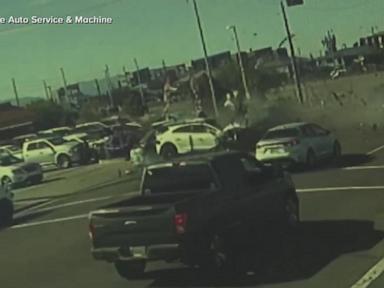
Waymo self-driving cars involved in Phoenix multi-vehicle crash
This video footage from local news coverage details the multi-vehicle crash involving autonomous vehicles in Phoenix, breaking down how the collision unfolded on the street.