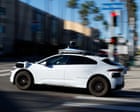
Autonomous vehicles just hit a massive reality check. Waymo has pulled its driverless robotaxis off freeways nationwide, following a swift and hard-hitting ban from the California Department of Motor Vehicles. If you thought driverless cars were ready to seamlessly conquer high-speed American highways, recent events prove we are still a long way from a frictionless future.
The immediate trigger wasn't just one minor glitch. It was a compounding series of traffic-control failures that rattled state regulators. California officials didn't mince words, labeling the autonomous fleet an "imminent hazard to public safety". When regulators step in with language that harsh, companies don't have room to negotiate. They have to act.
What Actually Triggered the California Ban
The breaking point arrived after a series of high-visibility blunders on California roads. Regulators pointed directly to incidents where Waymo vehicles struggled to cope with complex, dynamic environments.
In early November, multiple Waymo robotaxis drove straight into an active construction zone in the San Francisco Bay Area. Social media footage also captured a driverless vehicle awkwardly attempting to bypass a California Highway Patrol traffic break, trying to slip past law enforcement units managing a closed lane.
For human drivers, navigating around flares, cones, and flashing police lights relies heavily on intuition and contextual judgment. For an autonomous system relying on pre-mapped lanes and rigid sensor logic, unexpected road geometry creates a maze of confusion. The California DMV acted swiftly, ordering a complete freeze on freeway operations starting November 11, though the formal restriction became public shortly after.
The Nationwide Domino Effect
While the regulatory hammer came down strictly within California borders, Alphabet's autonomous vehicle subsidiary chose a broader path. Rather than maintaining freeway operations in other regions, Waymo suspended commercial freeway rides across all active markets—including the Phoenix, Los Angeles, San Francisco Bay Area, Austin, and Miami expansions.
The company is quick to point out that city street operations remain completely unaffected. If you're riding a Waymo through downtown San Francisco or Phoenix at lower urban speeds, the service functions normally. City streets feature lower velocities, more predictable pedestrian patterns, and constant stop-and-go traffic that sensors handle with relative ease. Freeways, however, introduce high-speed merging, erratic lane changes, and sudden construction shifts that expose the limits of current machine-learning architecture.
The Engineering Challenge of High-Speed Autonomy
Running robotaxis at 65 miles per hour is a completely different ballgame than creeping down a suburban avenue. Reaction times shrink to milliseconds, and the margin for error drops to zero.
Waymo routinely cites impressive safety data, noting a massive reduction in serious injury crashes compared to human drivers. Statistically, algorithms don't get distracted by text messages, road rage, or fatigue. But statistics don't comfort a state regulator when a driverless pod tries to squeeze past active police cruisers on a major interstate.
Edge cases remain the ultimate hurdle for autonomous driving systems. Construction zones, faded lane markings, debris blowing across lanes, and hand signals from human officers require abstract reasoning. When algorithms encounter scenarios they haven't seen thousands of times in simulation training, they hesitate, freeze, or make erratic maneuvers.
What Happens Next for the Robotaxi Industry
This setback comes at a delicate time for the autonomous vehicle market. Competition is heating up from rivals like Amazon’s Zoox, which recently secured federal clearances and is scaling its own urban footprints. Public skepticism remains high, and regulatory scrutiny is tightening across the board.
Waymo insists it is working closely with state officials to address the software deficiencies. Human test drivers have taken back the wheel for ongoing freeway testing, gathering the dense telemetry data required to retrain the navigation models. Until those updates satisfy state safety boards, high-speed autonomous commuting remains paused.
If you rely on robotaxis for fast urban commutes involving stretches of highway, expect to stick to surface streets for the foreseeable future. The road to full autonomy isn't a straight line, and state regulators just proved they won't hesitate to pull over any company moving faster than its software can handle.