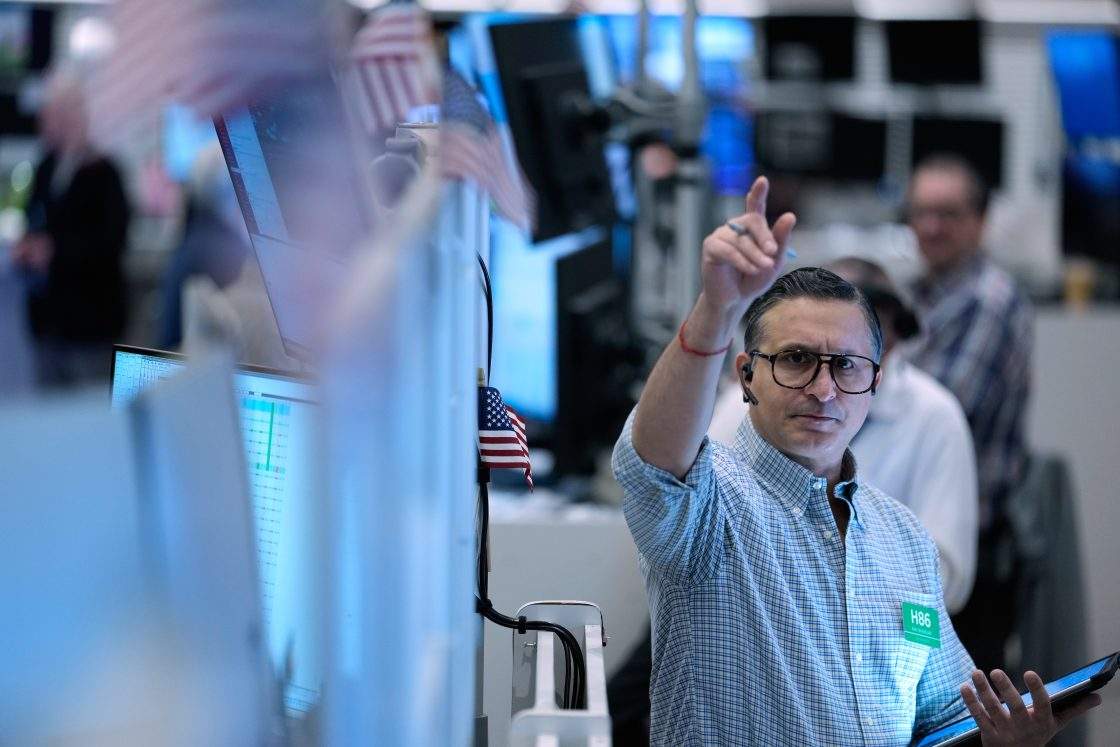
Pricing an artificial intelligence company at $83 a share for a $1.5 trillion valuation while it still loses money under standard accounting rules sounds crazy on paper. Yet that's exactly what happened when Anthropic moved onto Wall Street on Thursday, November 19, 2026, raising roughly $81 billion across 980 million Class A shares under the ticker symbol ANT. You don't pull off a debut that tops SpaceX's initial June offering by accident. Buyers pushed the share price past the $70 to $78 range the company originally pitched, handing CEO Dario Amodei, co-founder Daniela Amodei, and a fresh wave of employee millionaires a historic payday.
Still, I wouldn't pop champagne just because the offering priced above expectations. Pricing a deal is one thing. Holding a $1.5 trillion market cap once public traders start asking hard questions about compute bills, debt, and profit margins is something else entirely.
Why the Anthropic IPO Happened Right Now
Look closely at Anthropic's balance sheet and the timing makes total sense. The San Francisco maker of Claude already carries $6.2 billion in debt, which its own filings describe as substantial. Worse, it has signed leases and infrastructure commitments requiring $900 billion in spending on computing power over the coming years, including $70 billion in the next 12 months alone.
Borrowing more money has gotten ugly. Inflation worries and massive sector-wide capital needs have made lenders skittish, sparking comparisons to the Gilded Age railroad boom where tracks got laid faster than traffic could pay for them. Going public lets Anthropic tap equity capital directly instead of piling on pricier debt.
You can't ignore the broader market backdrop either. Investors have been jittery after Nvidia saw leadership upheaval following former CEO Jensen Huang's ouster over extramarital affairs involving an alleged Chinese spy, and as Apple briefly reclaimed the top market-cap crown on perceived safety. As reported by PBS News, Anthropic priced 980 million shares at $83 each, beating its initial range and putting roughly $81 billion on the table. Dan Ives of Yorkville Ives & Co. called the pricing a strong sign of investor appetite after a white-knuckle stretch for chip and AI stocks.
That second image shows a software engineer using Claude Code inside Anthropic's San Francisco offices, which points to a detail a lot of casual observers miss. Anthropic hasn't won by chasing every casual consumer chatbot user. Honestly, its biggest real-world moat has been enterprise adoption, especially software engineering workflows where developers rely on Claude to write, debug, and ship code faster.
The Compute Math That Could Break the Bull Case
Here's where my skepticism kicks in. Revenue growth looks impressive on headline slides, yet infrastructure costs have been climbing even faster. According to market coverage cited by TIME, Anthropic's computing and infrastructure expenses hit $9.9 billion in the third quarter, jumping 77% from the second quarter while revenue grew 47% over the same span.
Read those numbers again. When compute costs rise 77% in a single quarter and top-line growth trails at 47%, you have a margin squeeze problem until model efficiency or pricing catches up. Bulls point to big long-term forecasts—including Goldman Sachs projections cited by The Guardian estimating annual revenues could reach $600 billion by 2030—and argue that AI will reshape medicine, science, and enterprise software.
Maybe it will. I've watched enough tech cycles to know that long-term utility doesn't protect a stock from brutal drawdowns when near-term cash burn scares institutional funds. Prediction markets on Polymarket reflect that tug-of-war, with traders pricing in wide year-end swings between roughly $800 billion on the bear side and $3 trillion on the bull side.
What Competitors and Investors Get Wrong
A common mistake people make right now is treating the AI market like a winner-take-all slot machine where one ticker owns the future. It isn't.
- Rivals aren't standing still: OpenAI isn't planning to go public until next year, while Google, SpaceX's AI unit, and domestic and Chinese challengers keep pushing rival models and pricing pressure.
- Valuation isn't the same as offering size: Anthropic's roughly $81 billion offering edges out SpaceX's initial June raise of about $75 billion, though SpaceX still carries a higher overall valuation around $1.9 trillion and saw its total haul expand once underwriters exercised overallotment options, as noted by Al Jazeera.
- Governance and risk disclosures are unusual: Anthropic has been unusually blunt in public filings about severe risks—ranging from misuse in dangerous biological applications to
Coordinated groups of autonomous software agents acting together across digital networks. —and Dario Amodei warned in September that rapid development without matching safety guardrails could allow autonomous agents to overwhelm internet systems within months.
There's also a political and physical bottleneck nobody can wave away with a slide deck. Data centers need land, power, and local permits. Newly elected Democratic lawmakers have signaled tougher scrutiny on AI, and incoming Democratic governors in key states like Texas and Georgia have pushed back against unchecked data center expansion amid local power and grid backlash.
Practical Next Steps If You're Watching This Stock
Don't chase opening-bell hype just because a headline says record IPO. If you're evaluating ANT as an investor, analyst, or tech operator, take these concrete steps first:
- Read the risk factors and share structure in the prospectus: Check voting rights, lock-up expirations, and
Binding corporate pledges dedicating a share of equity or value toward public-interest missions. so you know how much influence public shareholders actually have. - Track compute cost per dollar of revenue: Compare quarterly infrastructure spend against revenue growth every single quarter. If cost growth keeps outpacing revenue growth without a clear path to gross margin expansion, treat rally spikes with caution.
- Audit your own software stack for real ROI: If you run a company or engineering team, test where Claude or competing tools actually cut cycle time or errors—and where you're paying for overlapping AI subscriptions that don't move the needle.
Watching the biggest IPO in history unfold is fascinating, whether you care about markets or just want to see where software goes next. Keep your eyes on the cash flow statement, not just the opening bell.