Fashion loves a heavy piece of hardware. For years, Nicolas Ghesquière made his name on sculptural silhouettes, rigid lines, and clothes that functioned as protective armor against the world. But when an unseasonably warm October evening in Paris forced a rethink during Paris Fashion Week, the Louis Vuitton creative director did something unexpected. He stripped away the heavy layers. He traded architectural rigidity for featherlight slip dresses and gossamer chiffon.
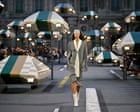
Climate reality is crashing hard into luxury design. When the sun set over the Louvre courtyard, thermometers still hovered around 24°C. Ghesquière admitted publicly that spiking global temperatures heavily influenced his shift toward breathable, floating silhouettes. The runway itself featured a surreal urban staging: 34 hovering electric cars raised on stilts, their tail lights cutting through the dusk while models navigated the space like everyday pedestrians facing a warming planet.
This pivot raises a bigger question about where luxury clothing is heading. Can high fashion survive extreme weather without losing its fantasy? Let us look at what actually changed on the runway and why this collection marks a genuine turning point for the French fashion house.
The End of Rigid Luxury
For a decade at Louis Vuitton, Ghesquière championed structured tailoring. His garments often required precise posture and felt like wearable sculptures. Yet urban pedestrians in a warming climate demand mobility and thermal comfort. Silk slip dresses, breezy vented tunics, and translucent layers replaced the stiff bodices of previous seasons.
The aesthetic shift was striking. Instead of feeling fragile, the clothes felt liberated. Beaded silver fringes caught the runway lights like futuristic sun visors, blending sci-fi utility with streetwear practicality. Ghesquière noted backstage that city life makes people feel simultaneously vulnerable and strong, and his garments reflected that duality through movement rather than weight.
Other heavyweights in Paris are noticing similar shifts. Designers across major houses are scrambling to adapt their textile sourcing to cope with erratic heatwaves. Heavy wools and dense brocades are taking a back seat to performance silks and technical fabrics that manage moisture and heat.
Beyond the Runway Spectacle
A Louis Vuitton show is never just about clothes. Staged inside the historic Louvre courtyard, the contrast between classical stone architecture and floating futuristic vehicles nodded to IM Pei's iconic glass pyramid. Yet the real spectacle extended far beyond the runway lights.
Just days before the show, French President Emmanuel Macron knighted Ghesquière at the Élysée Palace, recognizing his decade-long contribution to the nation's creative industries. LVMH remains a staggering economic force, contributing roughly one percent to France’s total GDP. When a designer at this level changes their core philosophy from armor to airiness, the entire industry feels the ripple effect.
Celebrity presence also highlighted the brand's cultural grip. Zendaya arrived wearing a ruffled organza jacket, while actor Bella Maclean wore sleek black tailoring. But the garments themselves remained the true focal point, proving that luxury houses can pivot toward functional climate realities without sacrificing theatrical magic.
What Designers and Buyers Must Learn
If you watch runway trends to guide your wardrobe investments, this collection offers clear takeaways.
- Prioritize weightless layering: Heavy structured pieces are losing ground to breathable, fluid fabrics that transition easily between unpredictable microclimates.
- Look for technical innovation: The fusion of sci-fi aesthetics with high-performance textiles is no longer niche. Expect more brands to integrate climate-responsive materials into ready-to-wear lines.
- Embrace practical ease: True luxury now means freedom of movement. Clothes that restrict your daily commute or trap heat are rapidly falling out of favor.
The shift at Louis Vuitton proves that even the most stubborn design philosophies must bend when the environment changes. Ghesquière traded his signature armor for something far more durable: relevance.