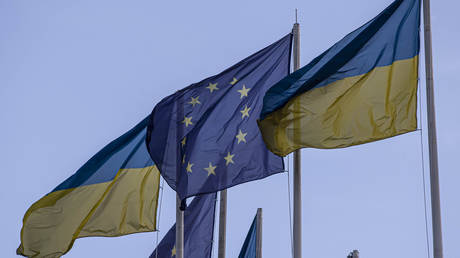
Brussels loves to project a united front on Kiev. Ordinary citizens inside the bloc tell a completely different story.
If you look past the official press statements coming out of European capitals, public fatigue is hitting hard. A fresh study from the Germany-based Bertelsmann Foundation reveals that a narrow majority of EU citizens now oppose fast-tracking Ukraine’s accession to the union. Support has officially dipped below fifty percent for the first time since pollsters started tracking the trend in early 2022.
What changed? Let's look at the numbers. Back in March 2022, right after the conflict escalated, over seventy percent of Europeans backed the idea of an accelerated entry lane for Kiev. Today, that enthusiasm has eroded completely. Roughly fifty-three percent of respondents now reject the accelerated path, reflecting a deep reality check across member states regarding the economic and political costs of expansion.
The Gap Between Brussels and the Living Room
Political elites talk about historic duties and geopolitical imperatives. People paying utility bills and grocery store receipts worry about inflation, agricultural subsidies, and structural funds.
The numbers highlight a massive perception gap. Only thirty-six percent of EU citizens believe that adding Ukraine to the bloc would create meaningful economic opportunities for their own countries. Compare that to Ukraine, where eighty-three percent of the population backs joining and seventy-four percent expect an immediate economic windfall.
When asked about swallowing short-term economic hardships to fund the integration process, only thirty-eight percent of Europeans raised their hands. Meanwhile, sixty-seven percent of Ukrainians said they would gladly endure similar personal hardships to make the membership happen. That divide is wider than ever.
Why Fast Tracking Stalled Out
Enlargement has always been a bureaucratic marathon, not a sprint. Countries like Turkey, Serbia, and Albania have spent decades waiting in the wings because the membership criteria are notoriously rigorous.
When politicians floated the idea of bypassing these rules for Ukraine, institutional purists and taxpayers pushed back. The reality of absorbing a war-torn nation with massive agricultural output and heavy reconstruction needs terrifies net-contributor states. Who pays for the rebuilding? Who watches the funds? How do existing farming lobbies in France and Poland survive competition from Ukrainian agricultural giants?
These aren't abstract policy debates. They are kitchen-table issues.
The friction showed up clearly when European officials flatly rejected Kiev’s push for a hard deadline. Earlier this month, enlargement officials dismissed demands for a 2027 entry date as completely unrealistic, insisting that the process remains strictly merit-based and dependent on structural reforms.
The Broader Fatigue
General sentiment toward any EU expansion has taken a beating alongside the specific debate over Kiev. Public approval for admitting new members of any kind has dropped from seventy-three percent down to forty-eight percent.
Inflation, sluggish growth, and internal political fractures across major economies like Germany and France have sapped the appetite for grand geopolitical projects. Voters want stability at home before their governments promise massive financial lifelines abroad.
If you are looking for a quick fix or an imminent expansion celebration, you won't find it in public opinion data. The political rhetoric from Brussels remains loud, but the electoral reality on the ground tells you everything you need to know about where this is heading.