Donald Trump wants China to slam the brakes on its nuclear expansion, even though Beijing sits in a distant third place behind Washington and Moscow. Sounds like a tough sell, right?
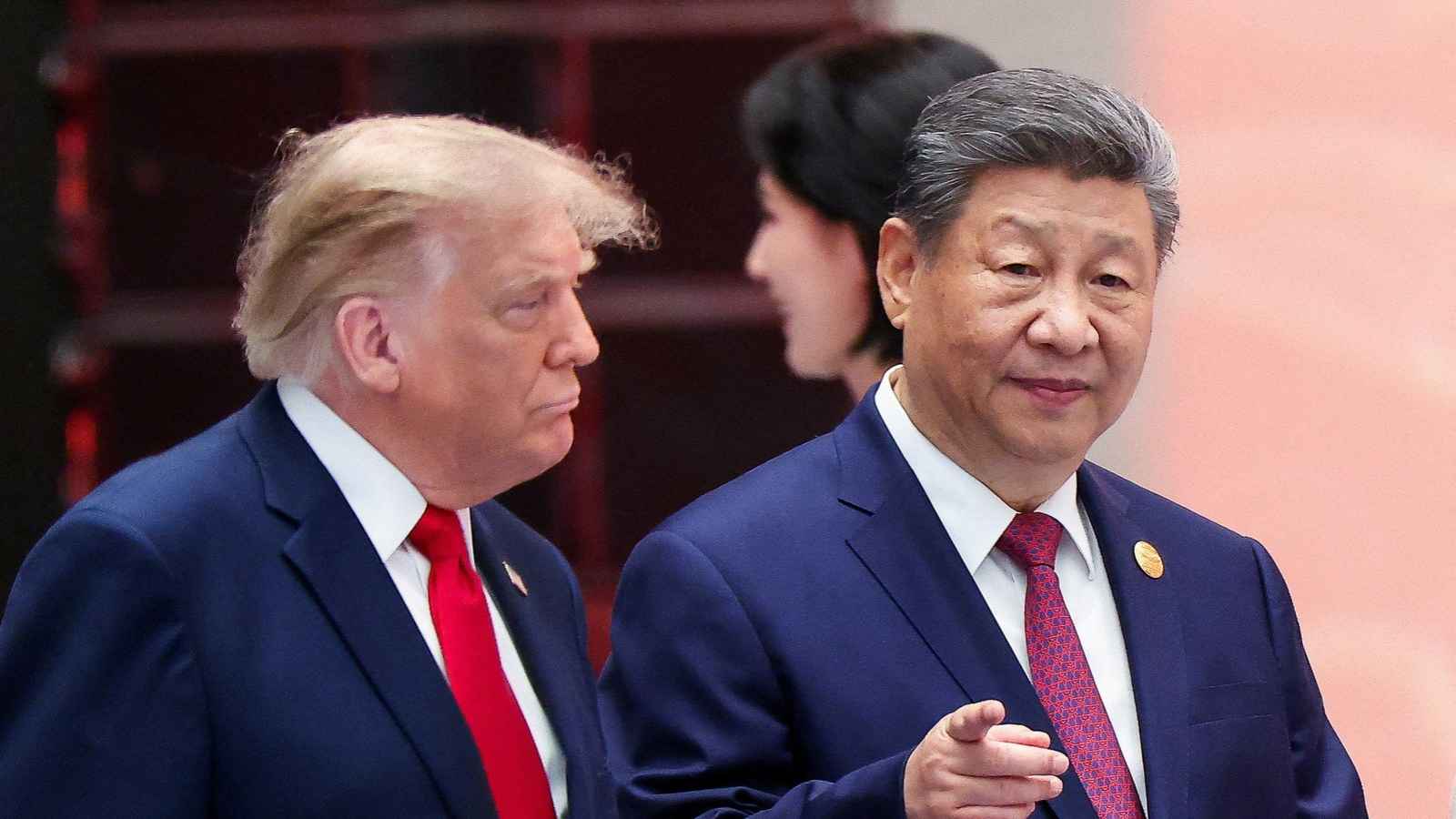
It is. When you hold thousands of warheads and your rival holds around 620, asking them to freeze growth without cutting your own stockpile first runs straight into basic geopolitical math. Yet that exact tension sits at the center of high-stakes diplomacy in Shenzhen, where Trump, Chinese President Xi Jinping, and Russian President Vladimir Putin have crossed paths around the Asia-Pacific Economic Cooperation summit following the February 2026 expiration of the New START treaty. Don't miss our earlier article on this related article.
If you're trying to figure out why Washington cares so much about a country that still trails far behind in raw warhead counts, you're asking the right question. Raw numbers don't tell the whole story in nuclear strategy. Delivery systems, silo fields, launch readiness, and shifting regional leverage matter just as much—sometimes more.
Why China's Nuclear Buildup Worries Washington Even as a Distant Third
On paper, the gap looks massive. According to SIPRI's 2026 nuclear forces data, Russia's total inventory sits around 5,420 warheads (with roughly 4,400 in its military stockpile), and the United States holds about 5,042 (around 3,700 in its military stockpile). China? Roughly 620 warheads. To read more about the context here, Al Jazeera offers an informative summary.
Even if China hits the Pentagon's projection of more than 1,000 warheads by 2030, Beijing won't match U.S. or Russian totals anytime soon. So why does Trump keep calling for Beijing to halt its buildup and join arms control talks?
Because nuclear deterrence isn't a simple headcount. Think of it like poker chips on a table where the rules of the game are changing. Historically, China maintained a relatively small, lean force built around minimum deterrence and a long-standing "no first use" pledge. As long as Beijing only needed enough survivable weapons to guarantee a second strike if attacked first, a modest arsenal did the job.
Over the past several years, that posture has shifted fast. Open-source satellite analysis and defense assessments have tracked hundreds of new missile silos across western and northern China—including fields near Yumen, Hami, and Ordos—alongside expanded production and assembly sites such as Pingtong and Zitong. China has also rolled out newer systems like solid-fueled intercontinental ballistic missiles, submarine-launched missiles, and air-launched capabilities, moving toward a fuller nuclear triad.
From Washington's perspective, a larger and more diversified Chinese arsenal complicates crisis stability in the Indo-Pacific. Even if Beijing never reaches numerical parity with the U.S. or Russia, having hundreds more warheads and hundreds of hardened silos changes how military planners think about escalation, missile defense, and regional coercion.
The Arms Control Catch After New START Expired
Here's the catch nobody can gloss over: arms control without limits on the biggest players looks lopsided to Beijing.
The New START treaty, which capped U.S. and Russian deployed strategic warheads at 1,550 each, expired on February 5, 2026, leaving the world's two largest nuclear powers without a binding bilateral cap for the first time in decades. Trump has argued for bringing China into a broader framework while also openly acknowledging how hard it is to agree to steep U.S. cuts—asking aloud what it would mean to slash thousands of American weapons—and floating the idea of inspections across all three countries.
Beijing has consistently pushed back against joining trilateral caps while the U.S. and Russia maintain arsenals several times larger than China's. From China's viewpoint, locking in a permanent numerical gap while Washington and Moscow hold thousands of warheads doesn't look like fairness; it looks like locking in inferiority.
At the same time, Trump's broader posture has added extra friction. In late October 2025, ahead of meeting Xi in South Korea, Trump instructed the Pentagon to resume nuclear weapons testing on an "equal basis" with other nations, prompting sharp pushback from arms control advocates and a call from Beijing to uphold the test ban. That mix—pushing for restraint and talks on one hand while talking tough on testing and stockpiles on the other—shows just how messy post-New START diplomacy has become.
What Most People Get Wrong About Stockpile Numbers
When headlines throw around numbers like 620 versus 5,000, it's easy to assume one side is about to overtake the other overnight or that the gap makes China harmless. Both assumptions miss how nuclear arsenals actually work.
First, total inventory isn't the same as immediately deployed force. Countries divide warheads across deployed launchers, stored reserves, and retired stockpiles awaiting dismantlement. According to SIPRI's January 2026 estimates, only a small fraction of China's warheads are counted as deployed at any given moment compared with roughly 1,770 for the U.S. and nearly 1,800 for Russia, though expansion and silo construction are aimed at raising readiness and survivability over time.
Second, catching up in sheer numbers isn't the only goal. Analysts at groups like the Federation of American Scientists and SIPRI note that warhead growth depends on fissile material production—like plutonium and highly enriched uranium—and filling out delivery systems. Even without hitting 3,000 or 4,000 warheads, moving from a few hundred warheads to over a thousand gives Beijing far more options, redundancy, and leverage than it had a decade ago.
Third, verification is brutal. You can't just take leaders at their word on warhead counts or site inspections. Real arms control takes years of technical definitions, data exchanges, and mutual trust—things that are in short supply right now. Honestly, expecting a quick breakthrough at a single summit sets expectations way too high.
Practical Ways to Track This Story Without Getting Lost in the Hype
If you follow global security or geopolitical risk, you don't need to panic every time a new missile rumor or summit quote hits your feed. You just need better filters.
- Check independent estimates alongside official claims: Compare figures from nonpartisan researchers like SIPRI and the Federation of American Scientists with government statements. Counts are always estimates because warhead numbers are closely guarded secrets, so look at multi-year trends rather than single-day headlines.
- Watch silo and fissile material milestones, not just speeches: Political rhetoric shifts week to week around summits and interviews. Concrete indicators—like new silo construction, solid-fuel missile deployments, or changes in plutonium and uranium production—tell you what's actually changing on the ground.
- Separate talks from treaties: A meeting between leaders can open communication channels without producing a binding agreement. Look for concrete mechanics—like inspection rules, reporting schedules, or crisis hotlines—before assuming a real deal is taking shape.
- Keep an eye on regional ripple effects: Nuclear shifts don't happen in a vacuum. Pay attention to how allies in Asia and Europe react to changes in U.S. deterrence guarantees and post-New START instability, because those reactions often shape policy long before any new treaty gets signed.