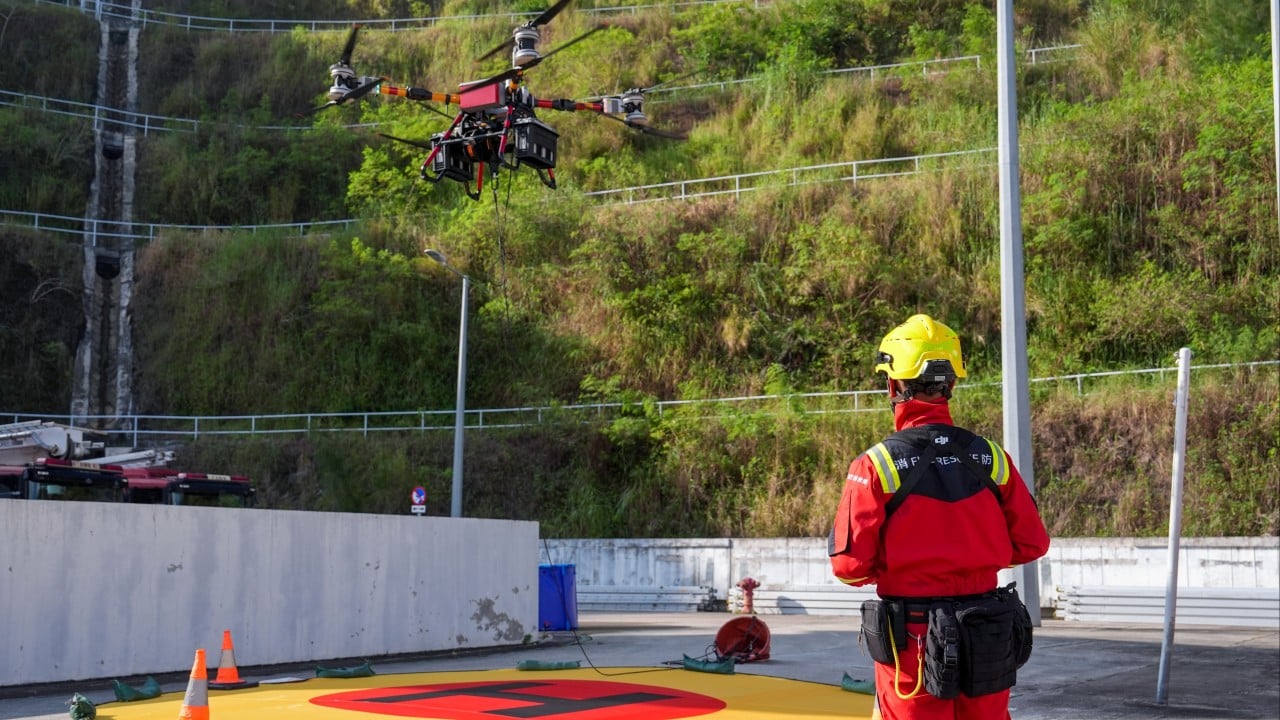
Traditional firefighting methods in dense urban-rural environments like Hong Kong are hitting a wall. When thousands of people head up hillsides during the Chung Yeung Festival to tend to ancestral graves, the risk of hill fires spikes dramatically. Historically, spotting these blazes depended on human eyes, lookout towers, and emergency hotline calls from hikers. That model is slow, and when dealing with dry vegetation and unpredictable wind, minutes matter.
Enter the automated aerial shift. Authorities have started deploying autonomous aerial units equipped with advanced computer vision to patrol wildfire hotspots in real time. Instead of waiting for a plume of smoke to become visible to the naked eye from miles away, thermal sensors and intelligent onboard processing catch anomalies before they spiral out of control.
The Reality of Graveyard Season Hazards
If you have ever hiked Hong Kong trails around autumn festivals, you know the scene. Incense burning, paper offerings, and crowded paths create a massive environmental stress test. A stray ember lands in dry brush, and a small spark turns into a major ridge fire within minutes.
Emergency services face an uphill battle. The terrain is steep, roads are non-existent, and water sources are scarce. Firefighters often have to hike up with heavy gear under brutal conditions. Relying purely on reactive responses means crews are always playing catch-up.
That is why aerial automation changes the operational math. Instead of patrolling blindly, agencies use predictive mapping based on weather conditions, humidity levels, and historical hotspot data. When a flight path launches, onboard algorithms scan the tree line for signature heat anomalies that match open flame or smoldering debris.
How Thermal Vision Outsmarts Human Spotters
Human eyes get tired. Smoke blends into mist or haze, especially during humid or overcast days. Thermal cameras mounted on autonomous quadcopters do not suffer from fatigue or visual trickery. They look straight at the infrared spectrum.
When a temperature spike registers above a certain threshold, the system flags the coordinates instantly and transmits an alert back to the command center. Operators can verify the threat through high-definition optical zoom before dispatching ground teams. This cuts down on false alarms, which historically wasted precious man-hours and resources during peak festival periods.
You might wonder about operational limits. High winds and sudden rain squalls ground lightweight consumer drones instantly. Professional-grade public safety units used in these deployments feature weather-resistant frames and high-wind stabilization systems, but nature still dictates the rules. When typhoons or severe gusts hit, technology has to take a back seat.
Moving Past Reactive Emergency Response
Technology alone won't stop hill fires. Public education remains the primary frontline defense. Government bodies run extensive campaigns urging people to clear surrounding brush before lighting joss paper, use metal buckets, and clean up litter.
Yet, human behavior is hard to predict. People still leave burning embers behind or toss cigarette butts off paths. Because prevention campaigns never reach everyone, detection speed becomes the ultimate safety net.
Integrating machine learning into aerial surveillance allows authorities to map fire propagation patterns in real time. By analyzing wind speed and vegetation density metrics captured during flight, incident commanders can predict where a fire is heading next. This shifts strategy from simple containment to proactive evacuation and asset protection.
What This Means for the Future of Public Safety
We are watching a fundamental shift in how cities handle seasonal hazards. Drones are no longer just cool gadgets for aerial photography or cinematic shots; they are critical infrastructure tools.
As battery technology improves and onboard processing power scales up, expect these autonomous patrols to become fully automated, launching from remote docking stations without requiring a pilot on-site for every single flight. The goal isn't to replace firefighters, but to give them eyes where they cannot physically stand.
If you are planning to head out during major cultural festivals, keep safety protocols front of mind. Clear your work area, pack water to douse remnants completely, and report smoke immediately. Even with advanced algorithms scanning the ridges, human responsibility remains the best defense against disaster.