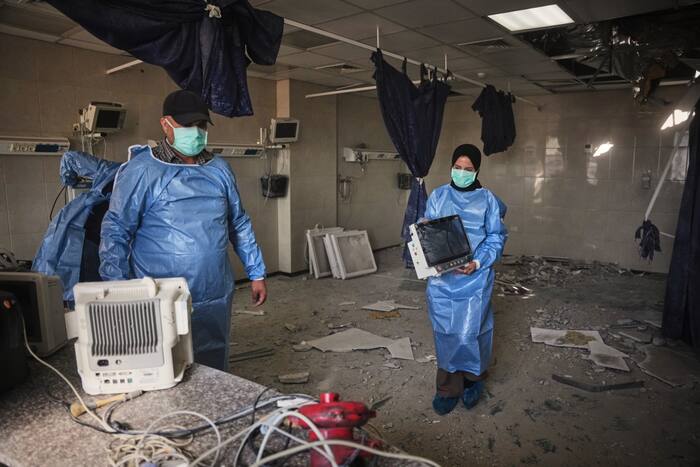
When a hospital becomes a frontline target, the concept of sanctuary evaporates entirely. That brutal reality hit home yet again when an overnight Israeli airstrike tore through upper floors of Nasser Hospital in Khan Younis, leaving a trail of civilian casualties and reducing critical medical spaces to rubble. Six people lost their lives in that single blast, including a doctor and a child.
If you look at headlines covering the ongoing conflict, you see endless statistics. But numbers on a screen fail to capture what happens when an intensive care unit or a surgical recovery ward gets blown apart in an enclave where nearly every alternative facility is already operating on fumes.
The Anatomy of a Broken Health Network
Gaza's medical network hasn't just been stressed; it has been systematically dismantled over years of relentless bombardment and crippling blockages on essential goods. Out of thirty-six pre-war hospitals, only a fraction remain partially functional. Facilities like Nasser Hospital try to shoulder an impossible burden, treating dozens of trauma cases daily while lacking basic necessities like anesthetics, clean gauze, and stable electricity.
Doctors are operating under conditions that resemble 19th-century field medicine rather than modern healthcare. When a major strike hits, there are no backup operating rooms down the hall. The destruction of a single surgical department ripples across the entire southern region, cutting off life-saving access for hundreds of thousands of displaced people living in crowded tent camps.
Why Traditional Aid Fails to Bridge the Gap
Even when ceasefires or temporary truces create small windows of opportunity, getting medical supplies through checkpoints remains an administrative nightmare. International organizations report that nearly half of essential medicines sit stranded outside borders or face endless approval delays.
Meanwhile, hospitals struggle to manage a secondary public health disaster. Overcrowded shelters lack clean water and sanitation, driving spikes in communicable diseases, severe malnutrition among young children, and chronic illness complications that go untreated because specialized care is entirely out of reach. Patients suffering from advanced cancer or organ failure face fatal delays while waiting for medical evacuations that rarely materialize.
What Happens When Protection Fails
International humanitarian law grants hospitals explicit protected status during conflicts, recognizing them as safe spaces where even combatants must be treated without discrimination. Yet, repeated strikes on facilities like Nasser Hospital demonstrate that these legal safeguards offer zero practical protection on the ground.
When medical staff are killed alongside their patients, the psychological toll on surviving health workers is immeasurable. They face an impossible choice: abandon the dying or stay and risk becoming casualties themselves. Every strike chips away at the last remaining threads holding the civilian fabric together, turning places designed to heal into monuments of loss.